June 2020

June came along and sprinkled some late garnish onto the spring of 2020, which I was about to consign to the garbage dump of history since, apart from the kite day, it had been a prolonged period of dips and misses. During the first week of the month a few late Wheatears were about and I found a tame female at Vazon on 1st. Habitat-wise, there is no reason that breeding should not occur on the headlands, but of course the disturbance levels are too great and we never get any, apart from the odd pair every now and again on Lihou or Herm Common (two of the few undisturbed locations). Also at the start of June, the Reed Warbler continued to sing in the reeds at Pulias Pond which is unusual there. I didn’t get the impression it found a mate though I will keep an eye out for juveniles nonetheless.

Wheatear - Vazon, 1 Jun 20

Wheatear - Vazon, 1 Jun 20

Wheatear - Vazon 1 Jun 20

Wheatear - Vazon 1 Jun 20

Pulias Pond, 1 Jun 20, looking like a Mediterranean salt pan after a week or so of small high tides. Only the highest tides are able to come in and replenish the water, so hot days and evaporation can make the pond almost red in colour.

Pulias Pond, 1 Jun 20, looking like a Mediterranean salt pan after a week or so of small high tides. Only the highest tides are able to come in and replenish the water, so hot days and evaporation can make the pond almost red in colour.

A notable feature of late spring 2020 was the influx of Rose-coloured Starlings into Western Europe and the UK. Flocks had even been seen in southern France so I made it my mission to find one on the patch. However, after one week of checking every usual Starling flock along my route, there was no sign. So, on 10th June I decided to extend the search to areas away from the patch, and thought to myself where the next likely location would be. I decided that there would definitely be one with Starlings at Jaonneuse and so I drove straight there after work to find it.

And so I pulled up in the car park at Jaonneuse, saw a small group of Starlings on the beach, lifted my bins and saw a pinky Rose-coloured Starling feeding on the sand. That almost never happens!

This was actually the 50th record for Guernsey, which continues to be probably the best site in western Europe for the species (taking into account observer bias) and I think this is the 5th time I have found one. It is the first time I have had a good look at a pink bird since the last one I saw was for literally a second as I whizzed past in the car. This bird was not an adult male though and had dull plumage, with very brown nape feathers. It didn’t stay much more than a few hours and was not seen the next day. I might have got better photos than these distant snaps but whilst I was taking these, my camera broke - never to work again! Luckily some better photographers got onto the bird and you can see some pics here by Dave C and here by Tony L.

Rose-coloured Starling - Jaonneuse Bay, 10 Jun 20

Rose-coloured Starling - Jaonneuse Bay, 10 Jun 20

Rose-coloured Starling - Jaonneuse Bay, 10 Jun 20

Rose-coloured Starling - Jaonneuse Bay, 10 Jun 20

Rose-coloured Starling - Jaonneuse Bay, 10 Jun 20

Rose-coloured Starling - Jaonneuse Bay, 10 Jun 20

The next unexpected bit of excitement happened on 13th June when, at about 9 pm, I was just settling down to start to watch a film and the Bird Alert went off. Someone had posted a video clip of a tree, but more interesting was the audio, as it was of a churring Nightjar - blimey! So I jumped in the car and headed down to Pleinmont as quick as possible arriving in the car park at Portelet just before half past. A group of us congregated on the bottom path just above Pezeries Bay where the bird had been heard from, but there was no churring audible. A couple of times we thought we may have heard something in the distance but we weren’t sure - I predicted another dip. Then a message came down from the original finder, who had returned to his vehicle at the top of Pleinmont, saying that he could hear it from up there.

Of course, we then set off in hot pursuit, scrambling up the narrow path towards the camping field in the half-light of dusk. I was at the front and, right in front of me, a chunky bird flew across the path, landing in a track-side tree - it was a still-fluffy, young Long-eared Owl. It was so close to me that I managed to pull my phone out of my pocket and take a couple of snaps as it stood there disgruntled. A second youngster also flew up just after.

Long-eared Owl - Pleinmont, 13 Jun 20

Long-eared Owl - Pleinmont, 13 Jun 20

As we crested the ridge, the Nightjar suddenly burst into “song” again and we could all hear it really well. It wasn’t too far away, somewhere near the camping field. We crept out of the vegetation quietly in case it flew but it was happy just to sit there, invisibly, churring away for us as we stood in the camping field. It appeared to be in the pines that overlook the Pezeries. I was not expecting to tick off a Nightjar this evening but it made up for us missing out on last year’s bird at Bigard which we searched for the evening after its one-night appearance. Previous to last year, there had not been an accepted Nightjar since the 1990s so this was a very welcome addition to most people’s Guernsey list.

I was quite content to tick off Nightjar as a heard-only bird and wasn’t really expecting to see the bird since it was now getting very dark and I wasn’t really thinking that a newly-arrived bird would be displaying at all. However, it suddenly took flight from the pine tree and I managed to record our exclamations as this bird first showed itself for our small band of ten or so birders (see audio clip below). It goes to show that, even after 30 years of birding I still get over-excited by it all.

We were then treated to some excellent views of the bird flying and displaying between two song posts, albeit always in silhouette. The way it swooped and glided was astounding, using its fanned tail like some kind of rudder. We couldn’t have asked for much better given the circumstances, and we all went away extremely happy - photo by Tony L here.. I can’t remember returning from a local twitch after 10 30 pm before. As it happened, the bird was to be seen in the same area all month on and off (although I never got round to going back down) and some people were lucky enough to see it perched in the daytime. I wonder if the species is attempting to colonise the Channel Islands since Sark has had a singing bird for the last couple of springs, and Jersey has had a pair being seen this year also.

Watching the Nightjar, Pleinmont, 13 Jun 20

Watching the Nightjar, Pleinmont, 13 Jun 20

The second half of the month was quiet for birds but I went to check out a few of the rarer breeding species in my neck of the woods. Was pleased to see that a single juvenile Little Grebe remained at Gallotin Quarry, the first island breeding pair for a number of years. I confirmed that there were definitely two singing Cetti’s Warblers at Grand Pre, which means that probably 10 males are around on the island in 2020, record numbers at least since last century. I checked out the nearby Common Tern colony and was pleased to see at least 14 birds flying around the area, although it is unlikely that many will breed here as it is not the best location as the island is accessible at low tide for both predators and human beings.

Juvenile Little Grebe - Gallotin Quarry, 20 Jun 20
Juvenile Little Grebe - Gallotin Quarry, 20 Jun 20

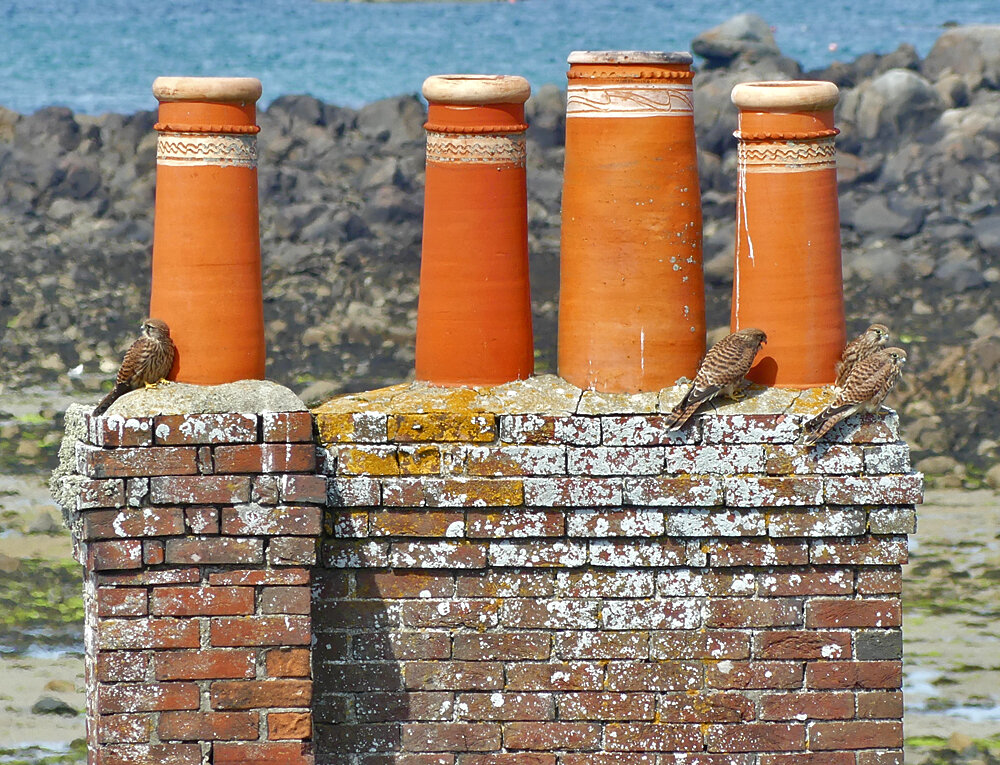
Kestrel youngsters - Les Vardes, 23 Jun 20 - the pair at the quarry seem to have done well with four juveniles seen.

Kestrel youngsters - Les Vardes, 23 Jun 20 - the pair at the quarry seem to have done well with four juveniles seen.

The moth trap was not very productive in June overall with few surprises. The only new species for the garden was Freyer’s Pug which the large individual below appears to be with its multiple, angled cross lines and narrowly-elliptical spot. I had more success searching for new micro moths in the field. I found an interesting larval case on an oak tree at La Garenne which matched with Coleophora ibipennella, a new species for me. I wasn’t sure whether the case had already been vacated, but after keeping it in a pot, a couple of weeks later a fresh adult appeared. This was also the case with Phyllonorycter maestingella, also collected from La Graenne, in a mine in a Beech leaf.

Freyer’s Pug - garden, 2 Jun 20

Freyer’s Pug - garden, 2 Jun 20

Coleophora ibipennella larval case - Oak leaf, Garenne, 7 Jun 20

Coleophora ibipennella larval case - Oak leaf, Garenne, 7 Jun 20

Coleophora ibipennella - adult emerged from above case on 28 Jun 20

Coleophora ibipennella - adult emerged from above case on 28 Jun 20

Ectoedemia subbimaculella (or less likely heringi) - perched on Oak leaf, La Garenne, 7 Jun 20

Ectoedemia subbimaculella (or less likely heringi) - perched on Oak leaf, La Garenne, 7 Jun 20

Large Tabby - garden shed, 13 Jun 20

Large Tabby - garden shed, 13 Jun 20

Lackey larva - Corbiere, 14 Jun 20

Lackey larva - Corbiere, 14 Jun 20

Phyllonorycter maestingella mine Garenne Jun20.jpg
Phyllonorycter maestingella - from mine from La Garenne, emerged 21 Jun 20

Phyllonorycter maestingella - from mine from La Garenne, emerged 21 Jun 20

Stigmella tityrella larva - mining a beech leaf, 15 Jun 20

Stigmella tityrella larva - mining a beech leaf, 15 Jun 20

Nemapogon cloacella (Cork Moth) - garden, 21 Jun 20

Nemapogon cloacella (Cork Moth) - garden, 21 Jun 20

During the periods of warm weather I managed to find a few new species for me and it meant that my total ‘British* Pan-species List’ managed to hit 2800 species. One of the best for me was the couple of Wool Carder Bees that I found at Les Vardes, a species that I have never happened upon before despite them being not too rare here - was about time that I saw some.

Wool Carder Bee - Les Vardes, 23 Jun 20

Wool Carder Bee - Les Vardes, 23 Jun 20

Wool Carder Bee - Les Vardes, 23 Jun 20

Wool Carder Bee - Les Vardes, 23 Jun 20

Paidiscura pallens with egg case - La Garenne, 7 Jun 20

Paidiscura pallens with egg case - La Garenne, 7 Jun 20

Honey Bee - garden, 7 Jun 20

Honey Bee - garden, 7 Jun 20

Kleidocerys resedae (Birch Catkin Bug) - Garenne, 7 Jun 20

Kleidocerys resedae (Birch Catkin Bug) - Garenne, 7 Jun 20

May 2020 part ii

Glanville Fritillary - Mont Herault, 31 May 20

Glanville Fritillary - Mont Herault, 31 May 20

The second half of May and the transition from birding to insect-hunting, with the hope of a nice rarity always in mind. It was disappointing that a couple more trips to the Track Marais didn’t produce anything new and perhaps the under-watched area isn’t hiding quality birds after all. But, it may just be an access issue, as even with the increased effort on my part, it can be a right pain getting in there! Nevertheless the male Marsh Harrier from there started appearing more often over the house which I am hoping means that chicks have appeared.

Male Marsh Harrier - over the garden, 18 May 20

Male Marsh Harrier - over the garden, 18 May 20

Evening at the Track Marais with a field full of Hemlock Water-Dropwort

Evening at the Track Marais with a field full of Hemlock Water-Dropwort

On 20th May conditions were quite promising for perhaps some late migrants at Pleinmont, so I gave it a wee bash. There wasn’t a great deal but I had singles of Wheatear, Whinchat, Yellow and White Wagtail, plus a nice Cuckoo that I watched in flight on two occasions. I also extracted my scope from the car - for the first time all spring! - to look at the shearwater flock which was already starting to build up off the headland. As last time, they were so distant but I felt that they were more or less all Manx Shearwaters, with none suggesting to my eyes that they were Balearic, but it was impossible to know for sure. A ten by ten estimate of about 450 birds was made.

Bird-wise, that was it for the month apart from a lone Spotted Flycatcher at Pleinmont on 27th. So no rarities seen and a couple of dips which I shall quickly gloss over and pretend never happened.

Whinchat - Pleinmont, 20 May 20

Whinchat - Pleinmont, 20 May 20

Buzzard - Mont Herault, 20 May 20

Buzzard - Mont Herault, 20 May 20

No doubt due to the lockdown and working at home a lot, I have been more observant about the local breeding birds than I usually am. A pair of Collared Doves decided to make a nest on next-door’s outside lights which I thought was a daft place since it had no protection at all from predators. And so it transpired when, one morning, I saw a Carrion Crow chase the dove off the nest and fly off with an egg. The birds soon abandoned the site. I wonder why some individual birds are so much smarter than others? Maybe it is just a the way these creatures learn.

One day I saw that some of the local House Sparrows were taking the odd bit of Willow’s fluff from the garden for their nests. So after the next groom, I collected the fur into a box and put it into the gap of the trellis. They couldn’t get enough of it! There was an almost constant procession of sparrows taking the fur away for home-improvements, our garden became the avian IKEA. A Great Tit also joined in.

Collared Dove - next door neighbour’s, 20 May 20

Collared Dove - next door neighbour’s, 20 May 20

House Sparrow - garden, 19 May 20

House Sparrow - garden, 19 May 20

House Sparrow - garden, 19 May 20

House Sparrow - garden, 19 May 20

Great Tit - garden, 19 May 20

Great Tit - garden, 19 May 20

Pheasant with chicks - Grand Pre, 18 May 20

Pheasant with chicks - Grand Pre, 18 May 20

Pheasant chicks - Grand Pre, 18 May 20

Pheasant chicks - Grand Pre, 18 May 20

Pheasant chick - Grand Pre, 18 May 20

Pheasant chick - Grand Pre, 18 May 20

The moth trap did not produce anything out of the ordinary during this time, although a tiny Poplar Hawk-moth was very strange - it only had about a 6cm wingspan including body.

Miniature Poplar Hawk-moth - garden, 28 May 20

Miniature Poplar Hawk-moth - garden, 28 May 20

Miller - garden, 21 May 20

Miller - garden, 21 May 20

During the last week of the month, since it was half-term and didn’t have to work from home, I visited the south coast three times for some quality walks and insect hunting. I walked west from Les Tielles on 25th, did the area above Petit Port on 29th and the cliff-top at Mont Herault on 31st. The highlights were the Glanville Fritillaries, with 3 at the usual Tielles quarry, plus the one below from a bit further west near the Long Cavaleux. At Mont Herault I had 3 individuals including one which fed on an umbellifer for ages without flying away which is unusual for this flighty species. With my arm at full extension, I managed some great macro shots. The Glanvilles appear to be decreasing at the moment so it was great to see them in three different locations.

Glanville Fritillary - West of Les Tielles, 25 May 20

Glanville Fritillary - West of Les Tielles, 25 May 20

Wasp Beetle - Les Tielles, 25 May 20 - good numbers noted during the week.

Wasp Beetle - Les Tielles, 25 May 20 - good numbers noted during the week.

Melanocoryphus superbus - Les Tielles, 25 May 20 - a new species of bug for me and very distinctive. This is a continental species which does not occur in the UK. Continental bugs seem to be increasing year on year here with many new heteroptera bei…

Melanocoryphus superbus - Les Tielles, 25 May 20 - a new species of bug for me and very distinctive. This is a continental species which does not occur in the UK. Continental bugs seem to be increasing year on year here with many new heteroptera being found. (note the strange asymmetry on this one)

Sibinia arenariae - Les Tielles, 25 May 20 - a tiny weevil, but luckily quite easy to identify due to the ‘keyhole’ mark on the top. Apparently quite common in Sea-spurrey clumps (where this one was) but a new species for me.

Sibinia arenariae - Les Tielles, 25 May 20 - a tiny weevil, but luckily quite easy to identify due to the ‘keyhole’ mark on the top. Apparently quite common in Sea-spurrey clumps (where this one was) but a new species for me.

Above Petit Port, 29 May 20

Above Petit Port, 29 May 20

Adela Croesella - Petit Port, 29 May 20 - there seemed to be a lot of these on the cliffs this year.

Adela Croesella - Petit Port, 29 May 20 - there seemed to be a lot of these on the cliffs this year.

Mont Herault, 31 May 20 - by the end of the month with practically no rain, the short vegetation on the cliff tops was very dry.

Mont Herault, 31 May 20 - by the end of the month with practically no rain, the short vegetation on the cliff tops was very dry.

Glanville Fritillary - Mont Herault, 31 May 20

Glanville Fritillary - Mont Herault, 31 May 20

Glanville Fritillary - Mont Herault, 31 May 20

Glanville Fritillary - Mont Herault, 31 May 20

Glanville Fritillary - Mont Herault, 31 May 20

Glanville Fritillary - Mont Herault, 31 May 20

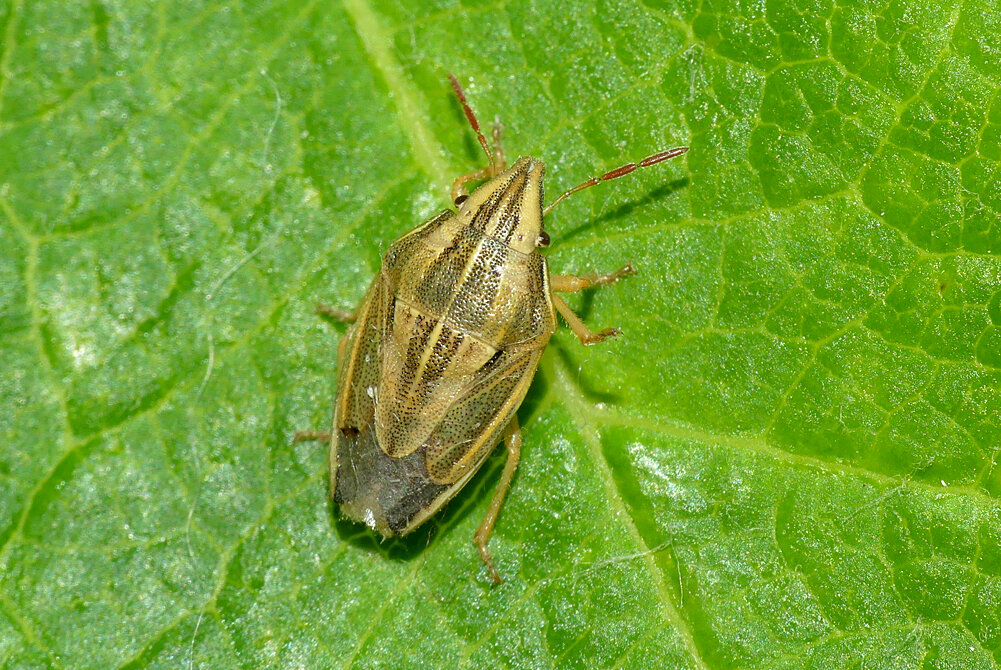
Bishop’s Mitre Shieldbug - Mont Herault, 31 May 20

Bishop’s Mitre Shieldbug - Mont Herault, 31 May 20

Ancistrocerus parietum - Mont Herault, 31 May 20 - a wasp in the same family as normal wasps but much, much smaller. they are Difficult to identify and, since I use english guides to identify this kind of thing, there is always the possibility that …

Ancistrocerus parietum - Mont Herault, 31 May 20 - a wasp in the same family as normal wasps but much, much smaller. they are Difficult to identify and, since I use english guides to identify this kind of thing, there is always the possibility that this may be a similar continental species.

A new species of beetle for Guernsey that I identified from a specimen, Paederus fuscipes. Similar to the more familar P. littoralis but with slightly different proportions.

A new species of beetle for Guernsey that I identified from a specimen, Paederus fuscipes. Similar to the more familar P. littoralis but with slightly different proportions.