
May 2026
/The first morning out birding was on 3rd May, when I did a circuit of Pleinmont. It was quiet for numbers of migrants, as May often is, a singing Sedge Warbler was the only record of note. However, the best sighting was non-avian. Wayne and I saw a couple walking a dog along the cliff path, and they said that they’d just seen some dolphins offshore, which were heading west. After a short search, we found them feeding off the rocky islets right of the Hanois, about 8 of them altogether. They were a little distant, but the tall fin and whitish colour meant that they were clearly Risso’s Dolphins. These are quite rare here, especially this early in the year, and these were only my second sighting of the species.
It was a bright, sunny morning on 8th May when I had my regular brief stop at Fort Hommet before work. I wasn’t expecting anything, and there was indeed nothing in the pines. Crossing the plateau, I flushed a lark from the dip, which flew low and away. The area often attracts a lone Skylark stopping off on migration, but this was quite late for one. The bird then surprised me by not flying high or dropping back down in the grass, but landing out of view, up in the lone tree by the road. A lark in a tree immediately sparks interest, and this was only ever going to be one species.
It dropped back down onto a path, and I could see its sharp supercilium but was struggling to see any other distinguishing features. It moved again and landed on top of the short grass on the plateau, and I could finally see the whole bird - a fabulous Woodlark. There are not lots of obvious plumage features that differ from Skylark, especially in duller spring plumage, but the black and white wing bend was visible, the rufous cheek, and I especially like the zig-zag pattern of the scapulars. Just as I was leaving, I saw it fly around briefly, where the different shape was obvious, and it also gave its distinctive call. This is only my second sighting of Woodlark in Guernsey (after the wintering group in 2012-13) and my first “self-found” migrant anywhere. Spring birds are unusual here, most occurring in late autumn.
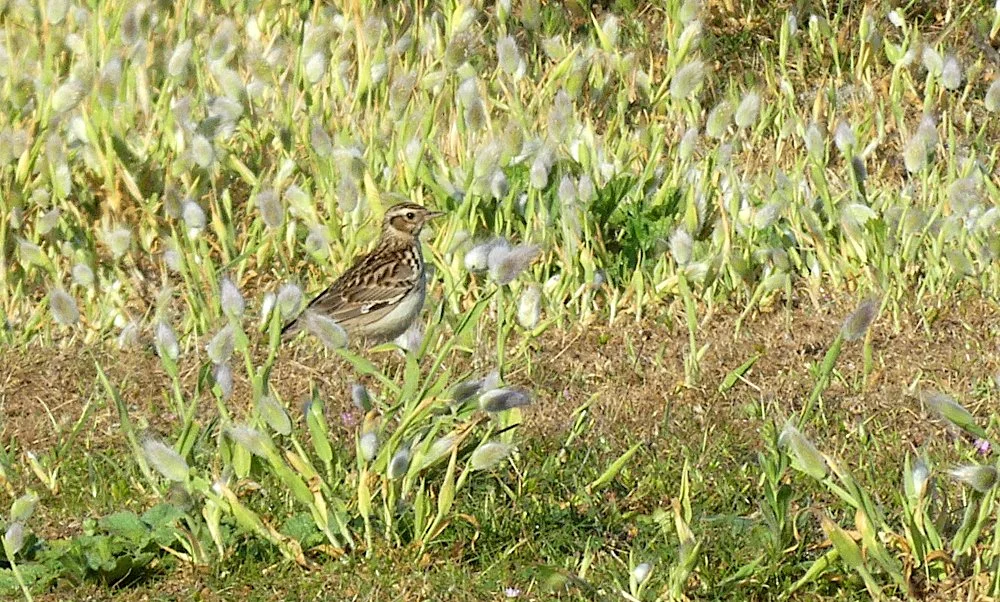
Woodlark - Ft Hommet, 8 May 26
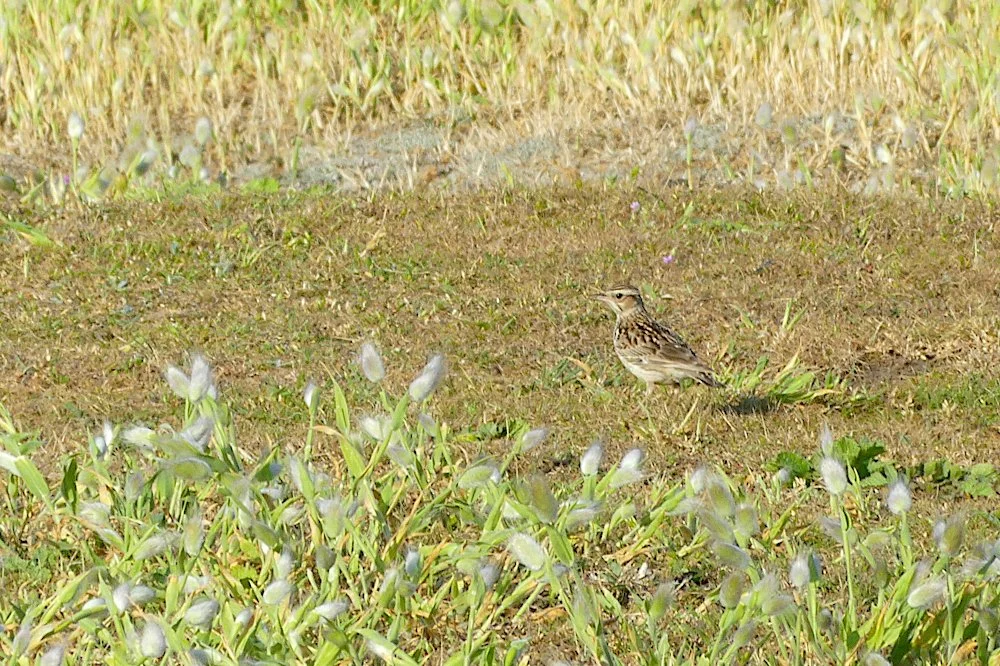
Woodlark - Ft Hommet, 8 May 26
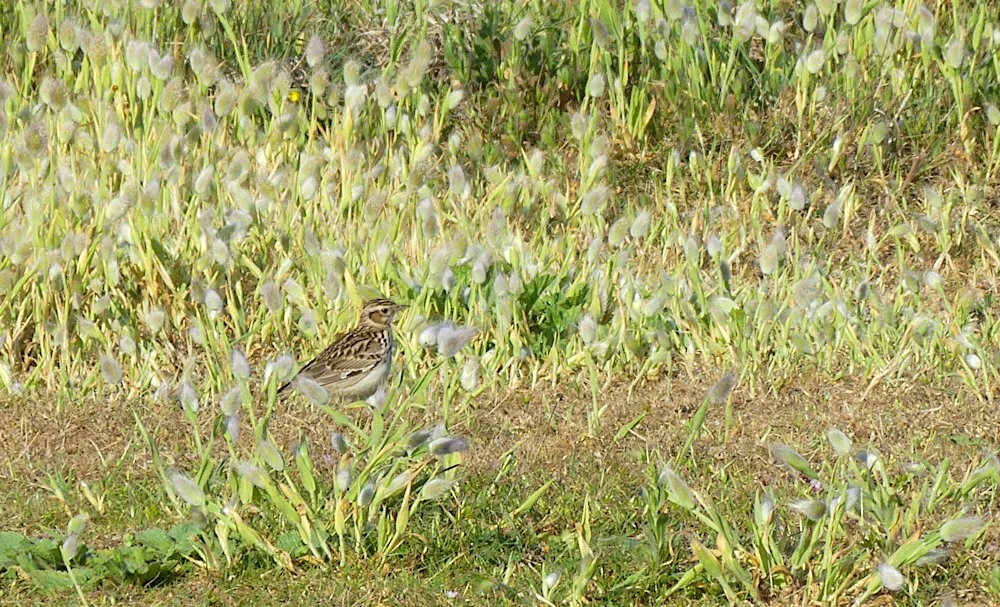
Woodlark - Ft Hommet, 8 May 26
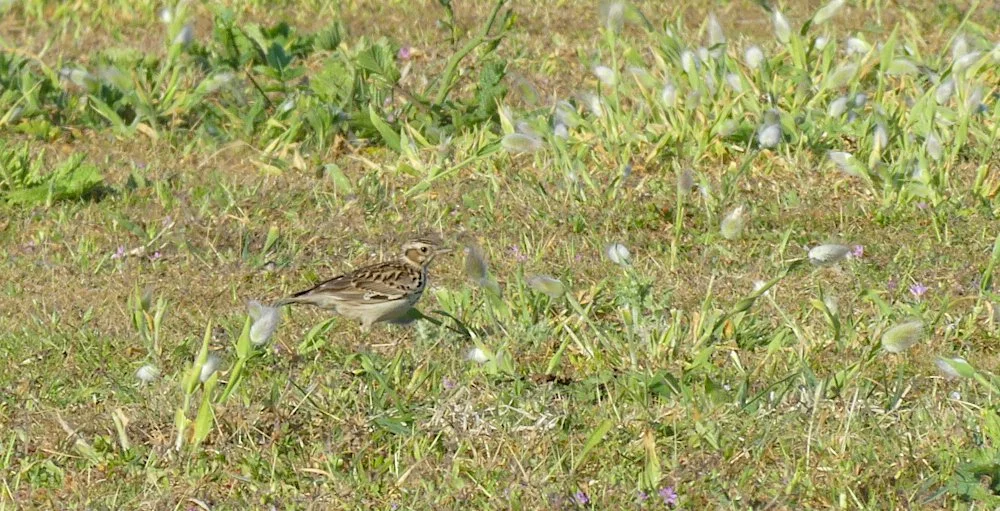
Woodlark - Ft Hommet, 8 May 26
There were slim pickings for most of the month, with just one or two Spotted Flycatchers noted on the patch. However, the second good sighting of the month happened at dusk on 23rd May when Andy and I were setting up a few moth traps on Icart headland to make the most of a brilliant week for insects (see below). We struggled to find suitable sheltered spots in the breeze, and so it was quite late when we were still putting everything together. It wasn’t quite dark yet, but I was sure I heard a short, two-second “churr” of a Nightjar coming from the trees along the nature walk behind me. I waited and listened and waited and listened, but there was no repeat of the sound, and I was beginning to think I had made an error and shrugged it off. Perhaps it was a distant engine or generator vibrating and carried in the wind. We turned on the lights as it was now properly dark, and we went back to the cars. I said to Andy that, just in case, before we headed back, I was going to walk down the nature trail for a wee way, and perhaps I could hear the call again. He came along, and we both had our head torches on as we headed into the darkness. A short way down, we turned a bend, and a Nightjar came shooting round the corner and above us in the sky, perfectly lit up in the torchlight!
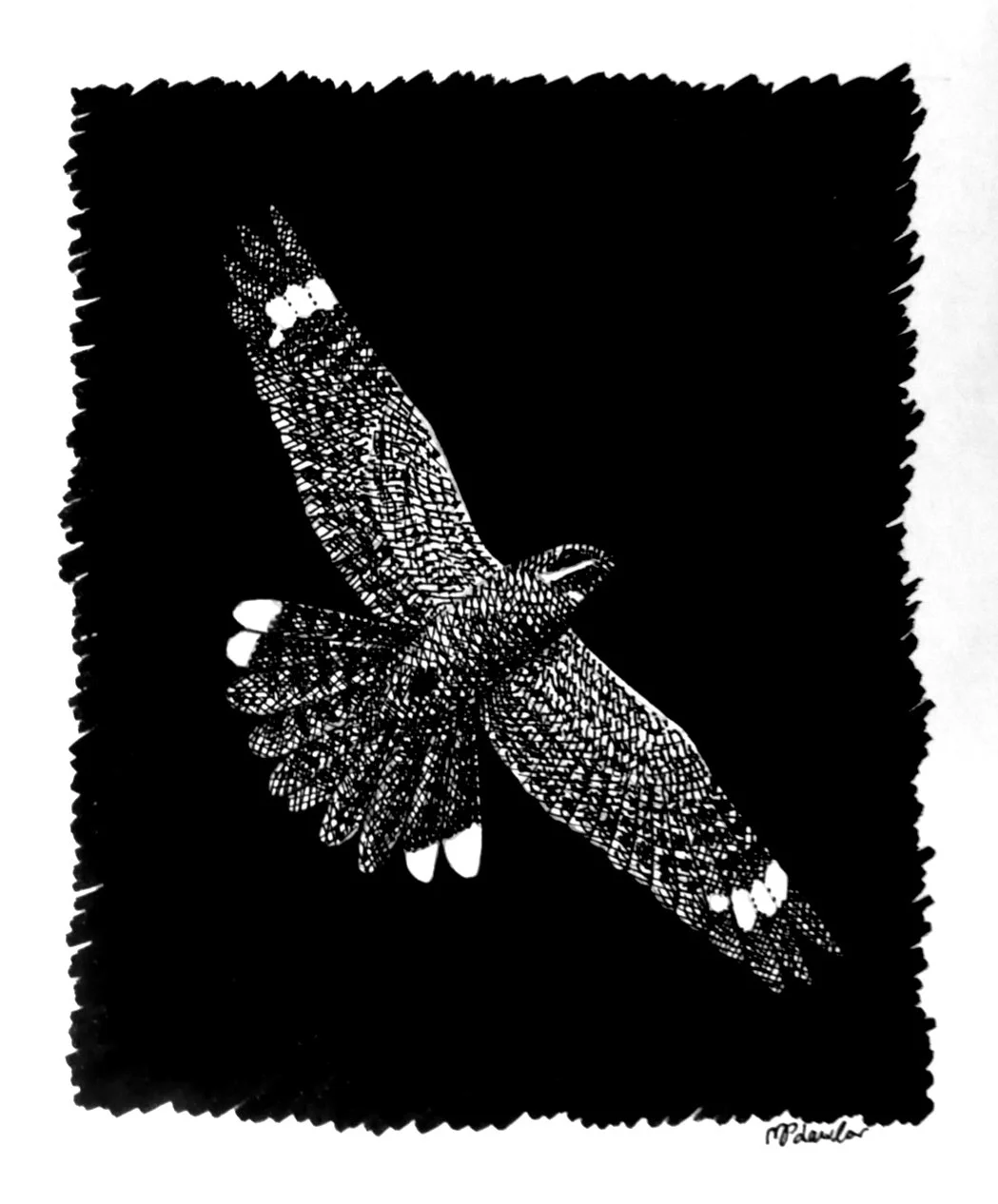
Nightjar - Icart, 23 May
It was a superb sighting. Not a gloomy shape in the dark like most of my other Nightjars, but a clear, point-blank view in the torchlight. The most noticeable feature was the bright white spots of the tail tips, glowing like landing lights on a small plane. This showed that the bird was a male, which matched the churring. We carried on down the trail, and we found it again as we rounded a corner, this time just taking off from a fence post it was perched on. Further along, we saw it a third time, hunting in the lee of the headland below the cliff path, racing back and forth. This is my second Nightjar in Guernsey and the first “self-found” migrant bird. Interestingly, a second bird was seen at Pleinmont at exactly the same time as our bird. I was so pleased that I decided to back myself and follow-up what I had heard. I could have easily just wandered home being none the wiser and missed such an exciting treat.
The last part of May was unusually hot for the time of year and, with winds mainly coming from France, it was definitely a time for regular moth trapping. I had the trap out in the garden on five nights between 21st and 26th May and recorded a total of 1358 moths of 167 species, the peak night being the 25th with 346 moths of 110 species. I have got these kinds of numbers in July or August in the past, but in May, this is exceptional.
I had a few new micros for the garden - Glyphipterix thrasonella (Eyed Rush Moth), Scoparia pyralella (Brown-spot Grey) and Epinotia bilunana (Crescent Tortrix), which are all relatively common on the island but warm weather encourages micros to wander more widely. I also caught an Epinotia nanana (Small Spruce Tortrix), which was the smallest tortrix I have ever seen, and needed a dissection, but appears to be new for the island.
Macro-wise, the rarest species was Many-lined, which I have had once in the garden, many years ago. This one is no doubt a migrant from the continent, as were the total of 39 Small Mottled Willows, easily my best ever period for this species. Other notable species were a Goat Moth, a Gem and a couple of Scorched Wings, plus a very early Lesser Broad-bordered Yellow Underwing, which doesn’t usually occur until late June (NB - it wasn’t a Langmaid’s).
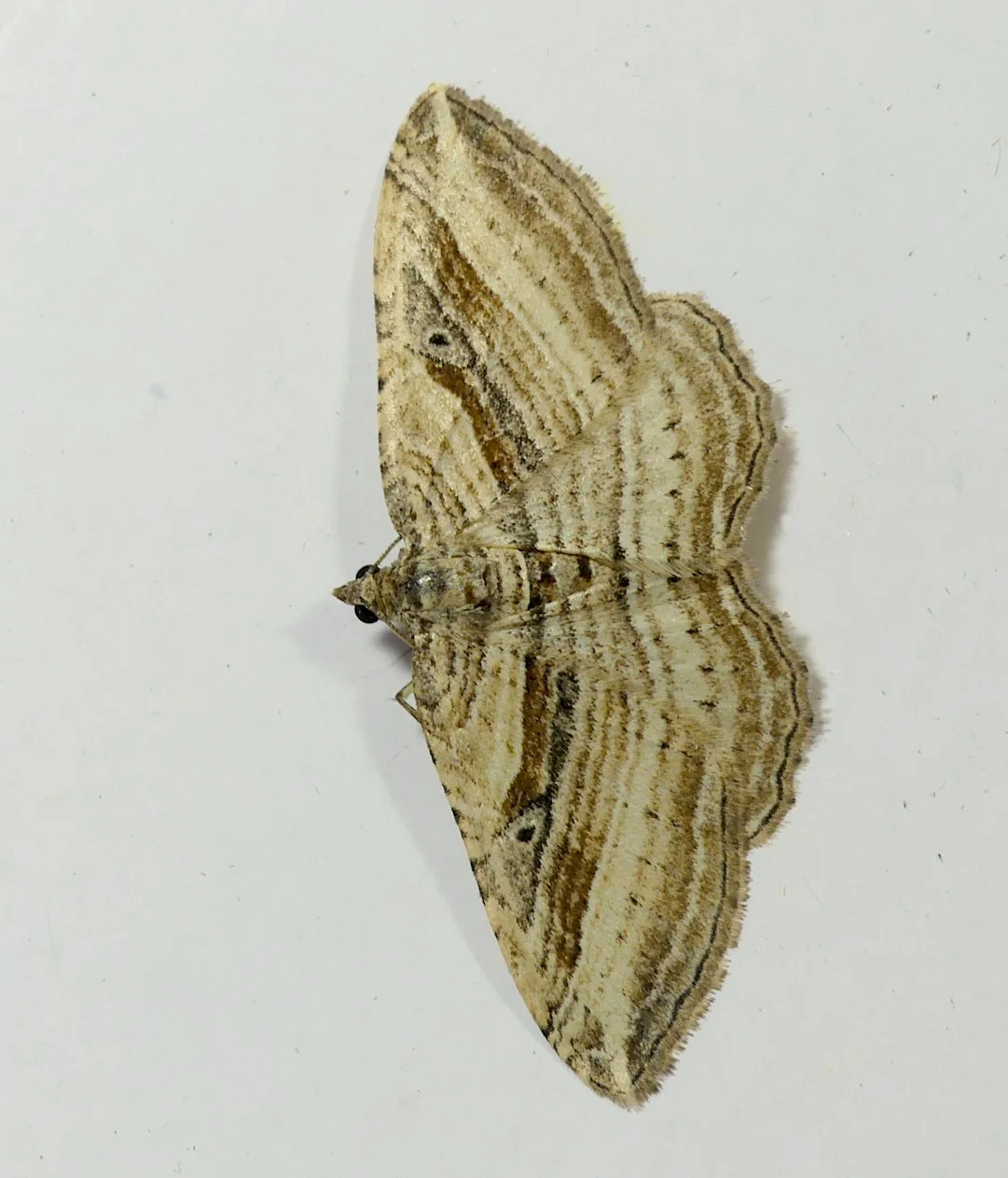
Many-lined - Garden, 25 May 26
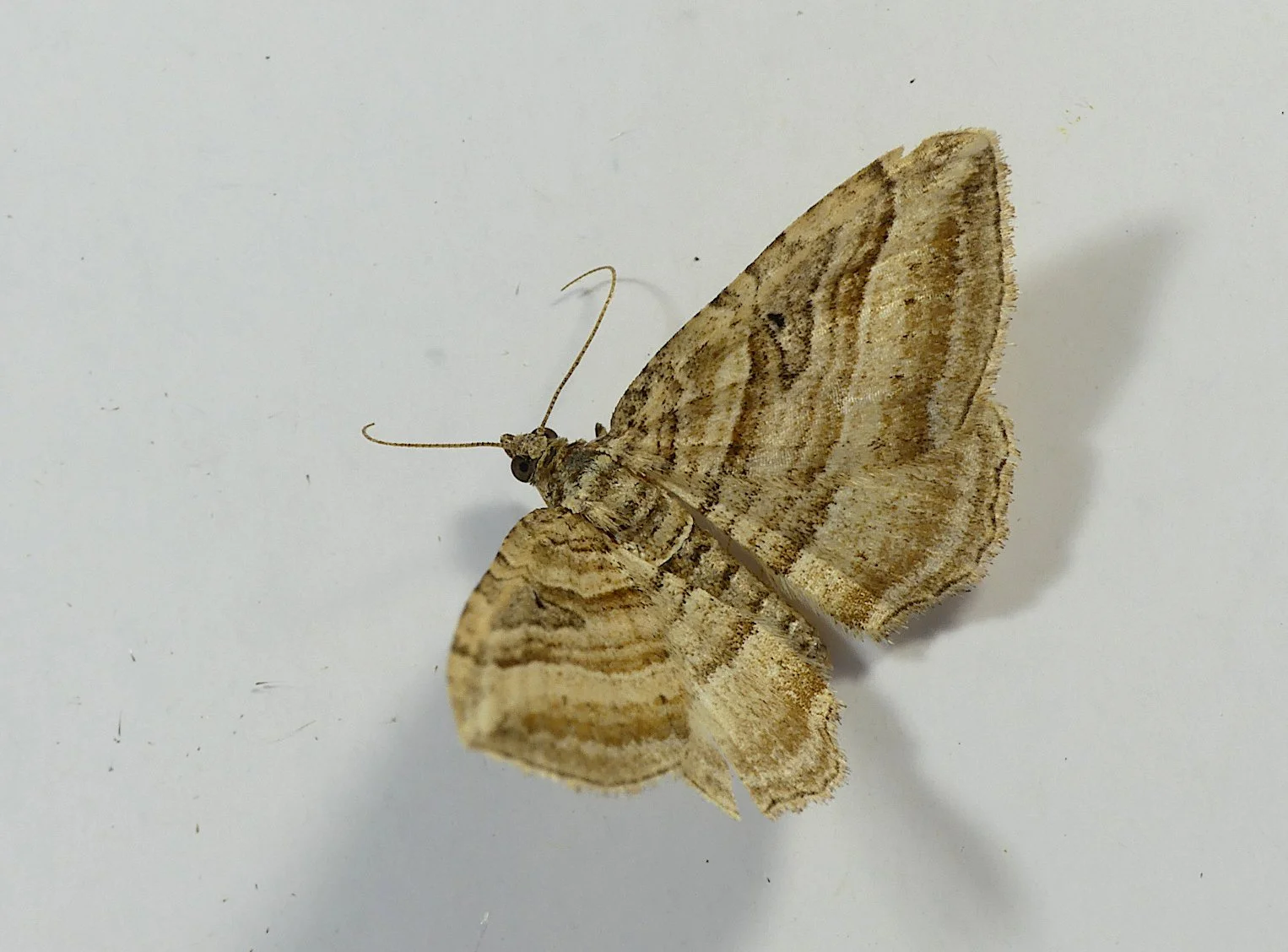
Many-lined - Garden, 26 May 26 - a second individual
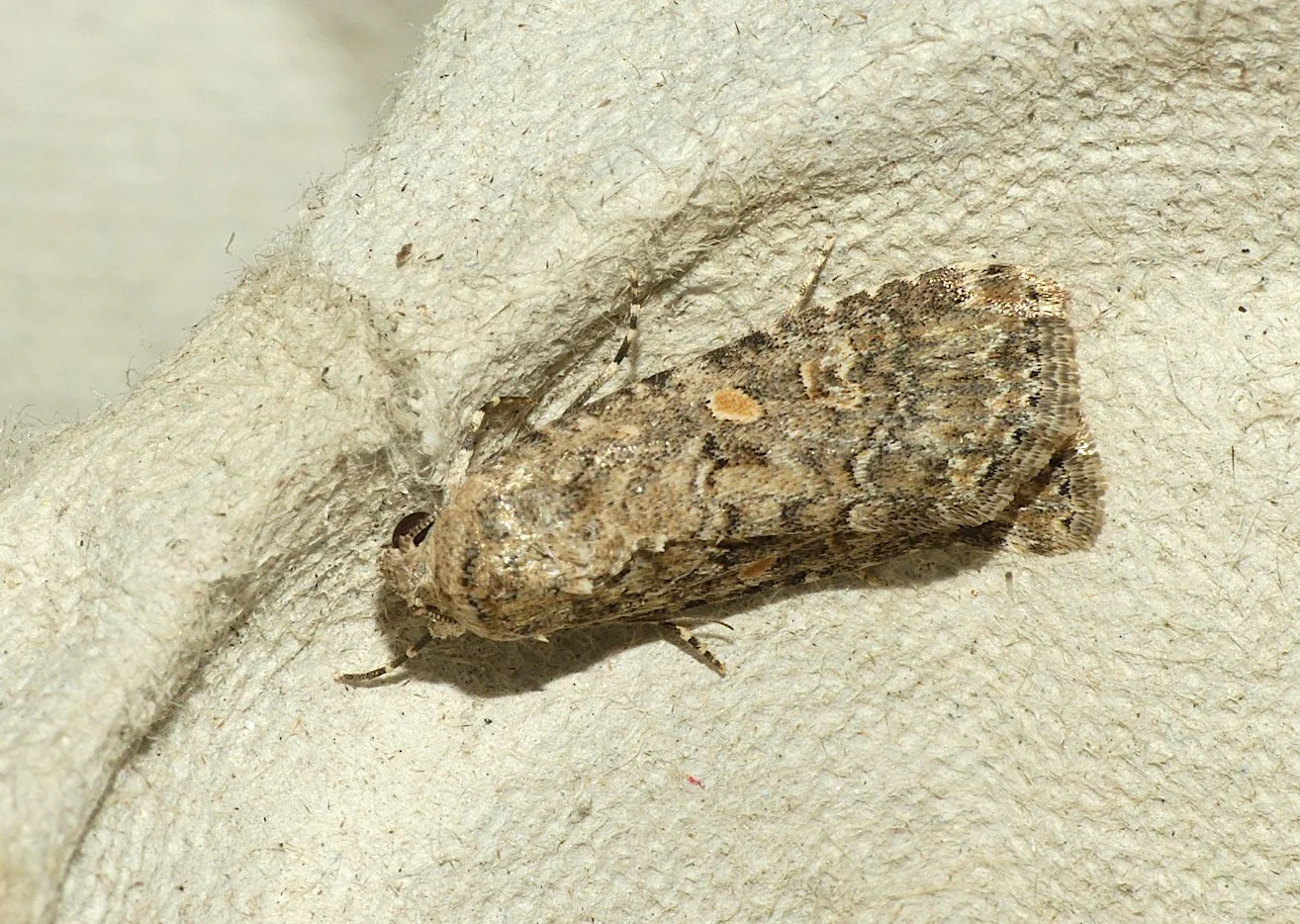
Small Mottled Willow - garden, 22 May 26 - one of many
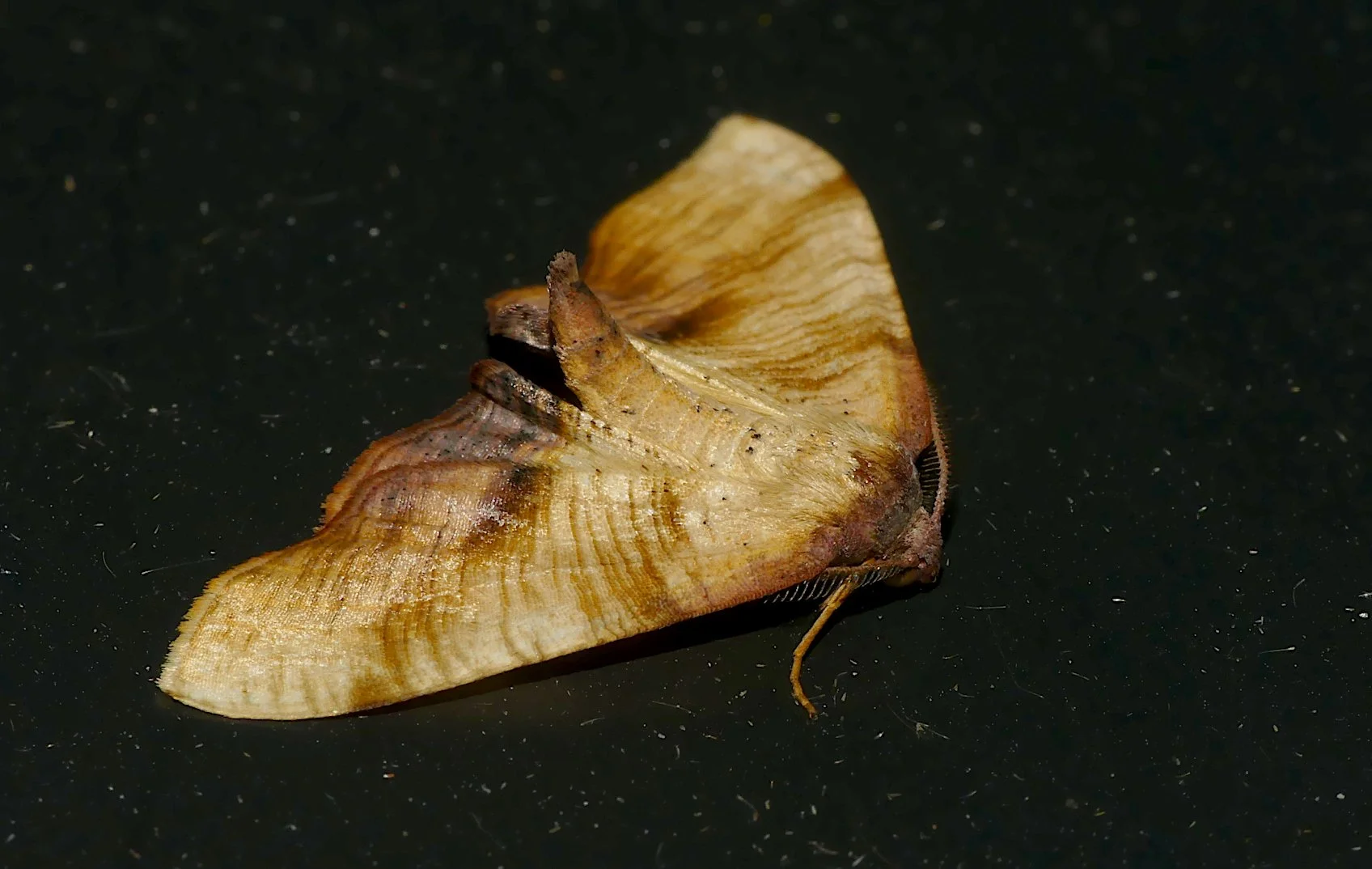
Scorched Wing - Garden, 25 May 26
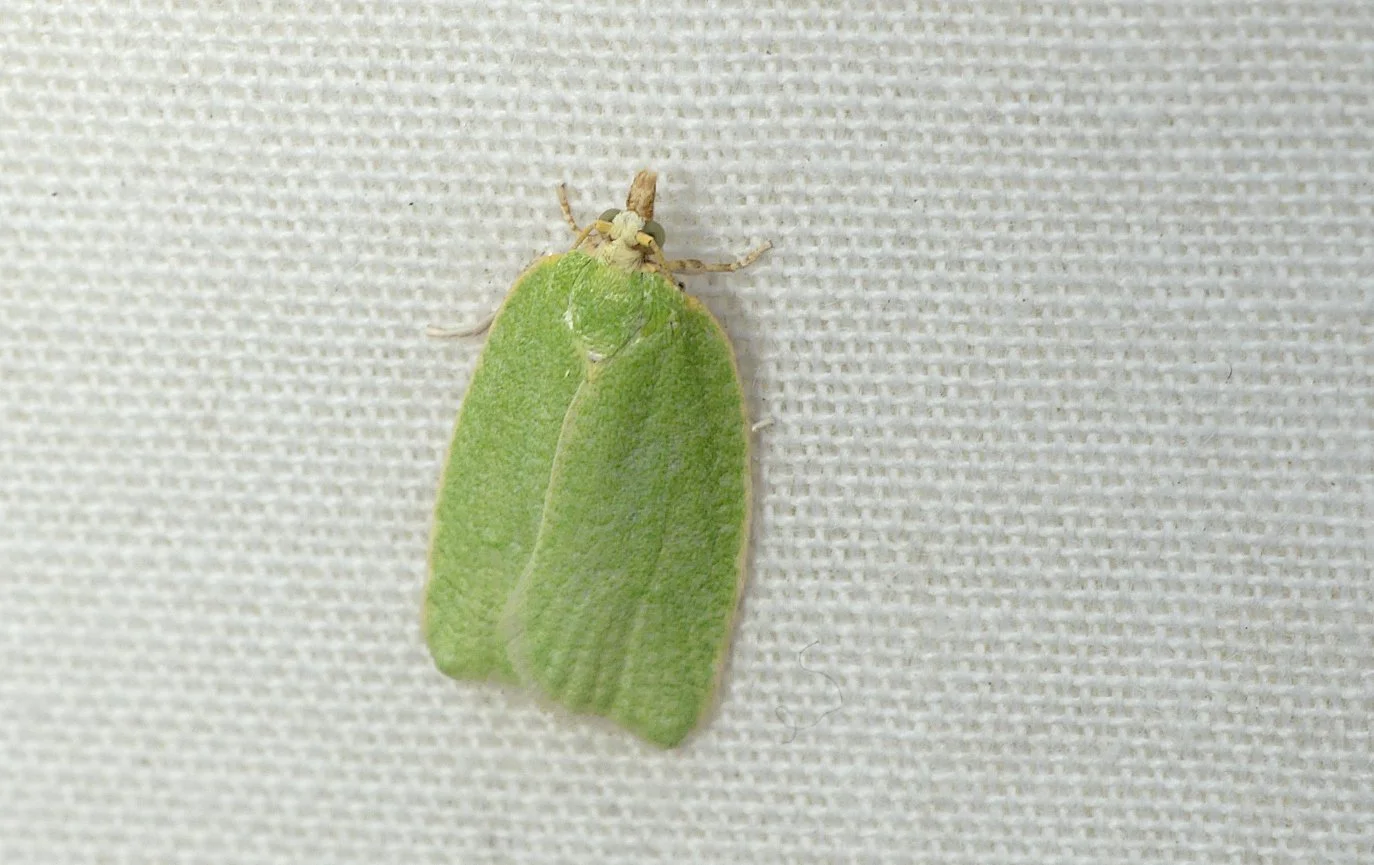
Green oak Tortrix - garden, 22 May 26
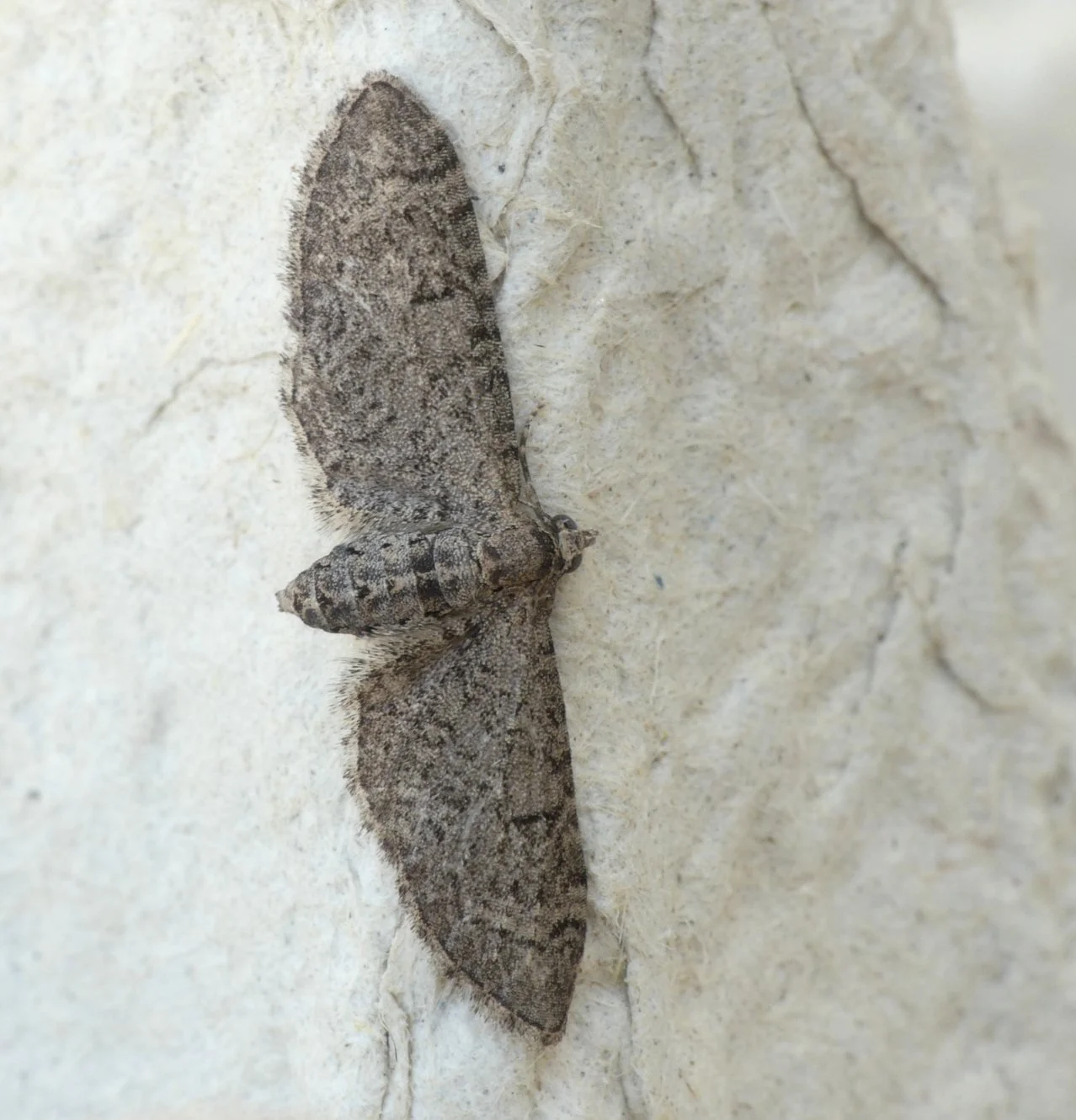
Channel Islands Pug - garden, 22 May 26
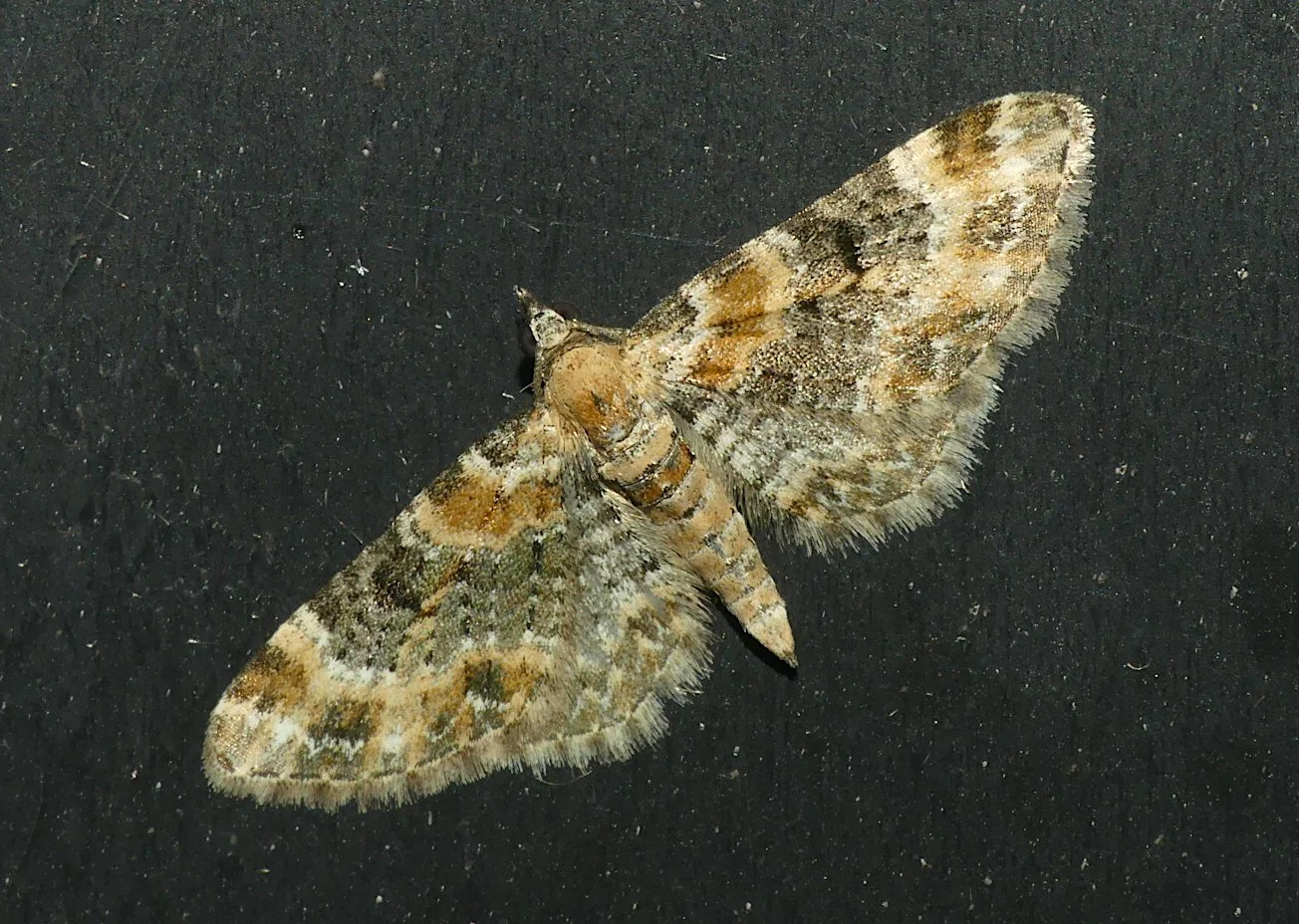
Foxglove Pug - garden, 22 May 26
In the middle of this good week, Andy decided that it was worth trapping on the cliffs, so we set up at Icart, despite the breeze suddenly changing to the north. However, the immigrant moths had already arrived, and we had some fabulous individuals and total when we emptied the traps the next day, with 504 moths across the four traps. I had one lifer, Choristoneura hebenstreitella (Great Tortrix) which was indeed very large, and I assumed it was forsterana at first. The best migrant moth was probably the Striped Hawk-moth, but we also had Small Marbled. Some of the totals for certain species were very high, including a whopping 85 Small Mottled Willow. There were also 12 True Lover’s Knots and 59 Barrett’s Marbled Coronet, two species I have hardly ever had at home but seem to love the cliffs.
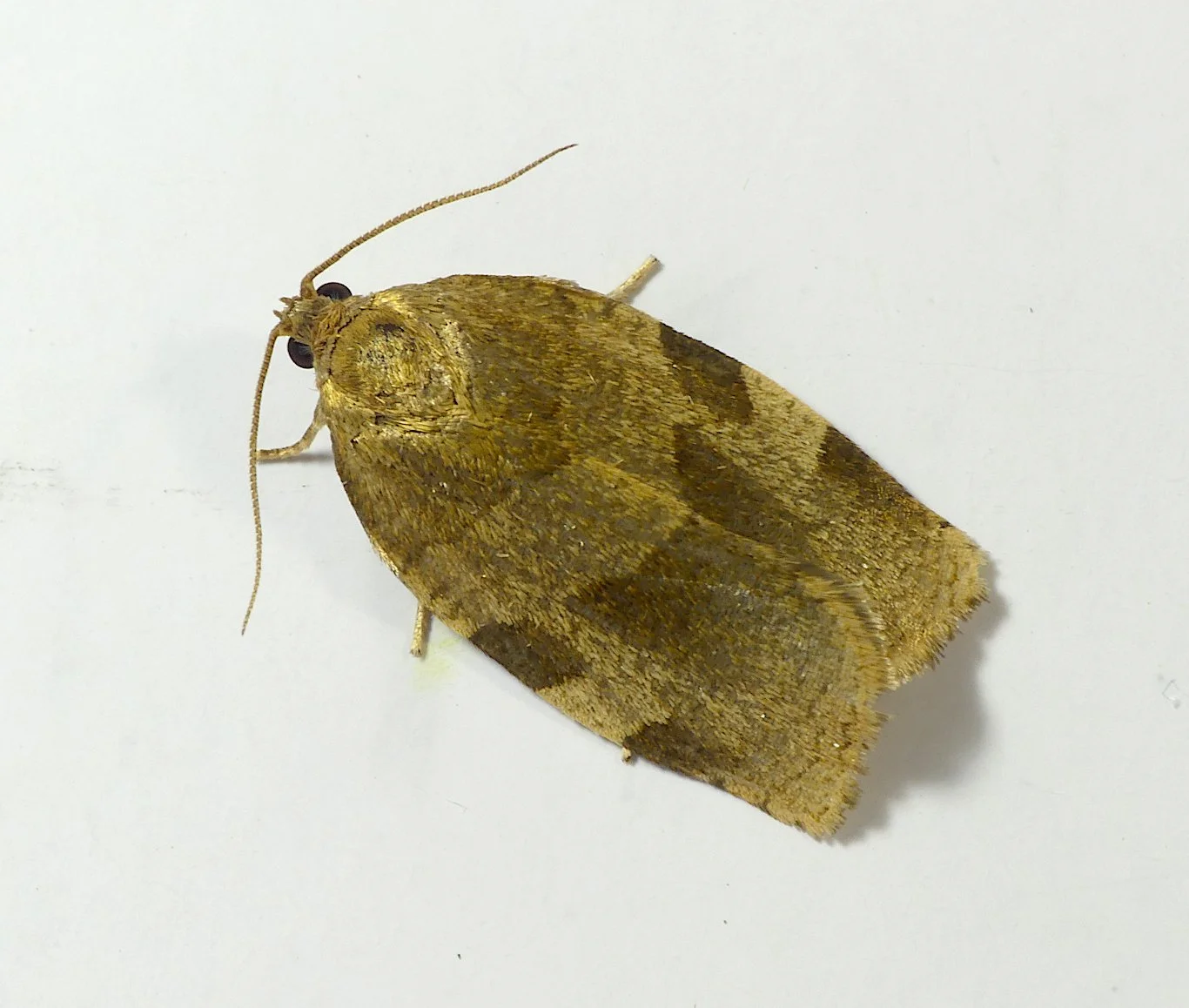
Choristoneura hebenstreitella (Great Tortrix) - Icart, 23 May 25
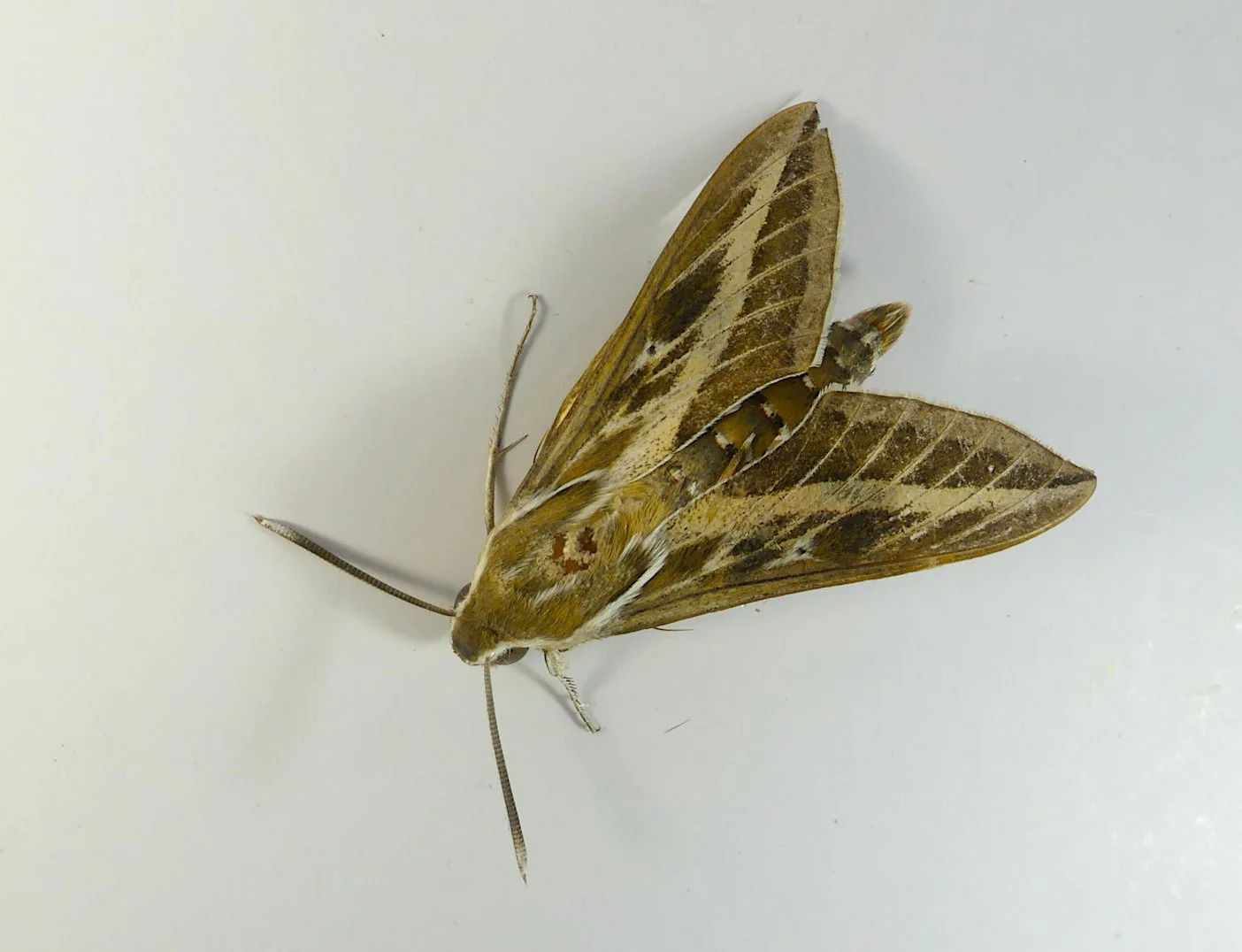
Striped Hawk-moth - Icart, 23 May 25
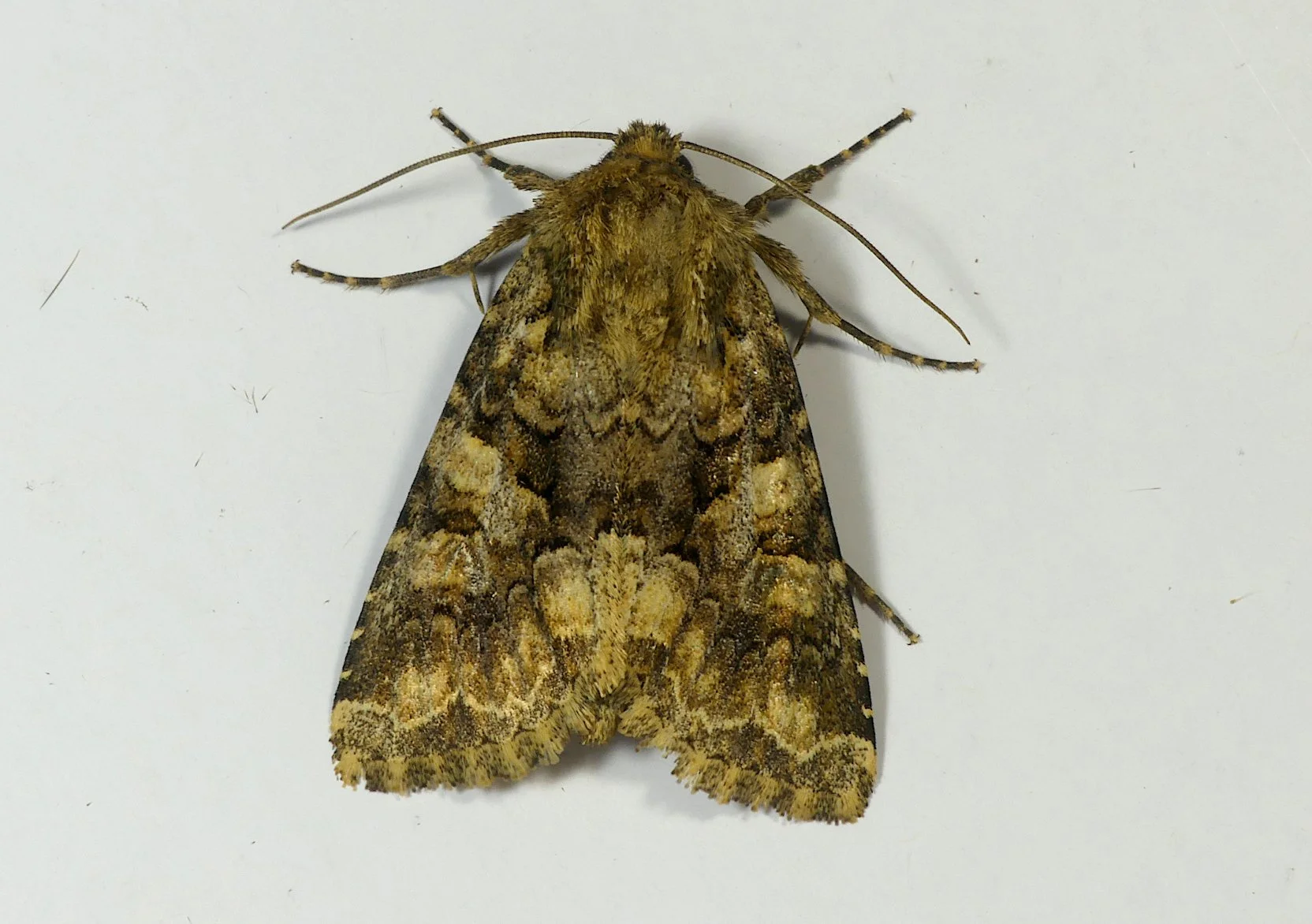
Barrett’s Marbled Coronet - Icart, 23 May 25
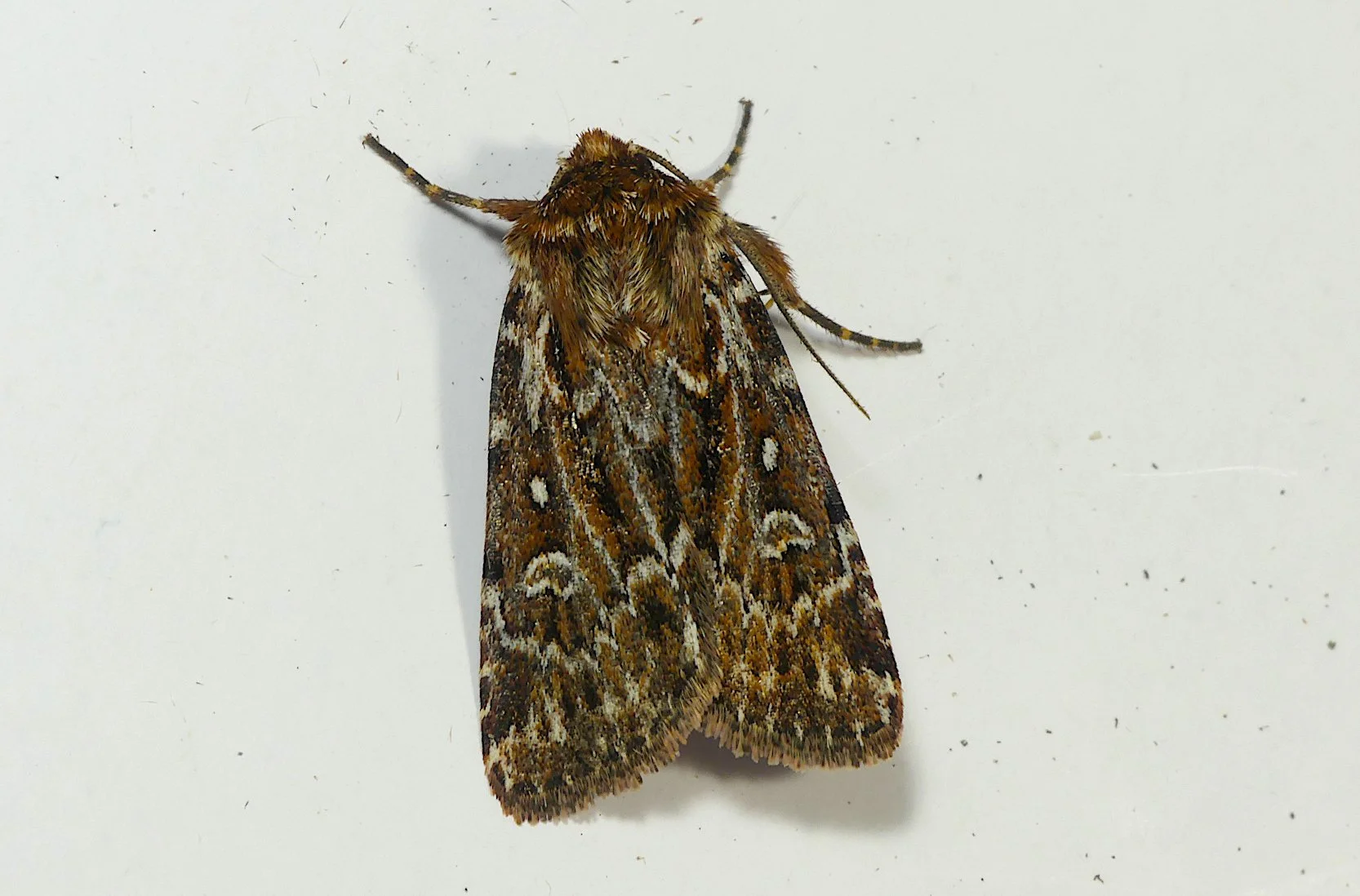
True Lover’s Knot - Icart, 23 May 25
The other insect sighting of the month which was exciting, was a lucky discovery at La Garenne Nature Reserve on 30th May. I decided that it would be a great idea to head over to the reserve one afternoon with a big stick and a white umbrella and beat the hell out of the oak trees! I caught lots of interesting, but mostly esoteric stuff, but was particularly caught by two small, striking, vermilion and black ladybirds that I’d never seen before. I got home and thumbed through my brand-new ladybird book and was confused why the species was not there. Proper research entailed, and I managed to find Novius cardinalis (Vedalia Ladybird) which, seems very rare indeed. There is a single record from Jersey and a few from central London, and that’s it for the UK, more or less. It seems that this is an Australian species that has been introduced in various places as a biological weapon against the Cotton Cushion Scale insect, which can affect crops. Just how this Darth Maul cosplayer has turned up in Guernsey is anyone’s guess.
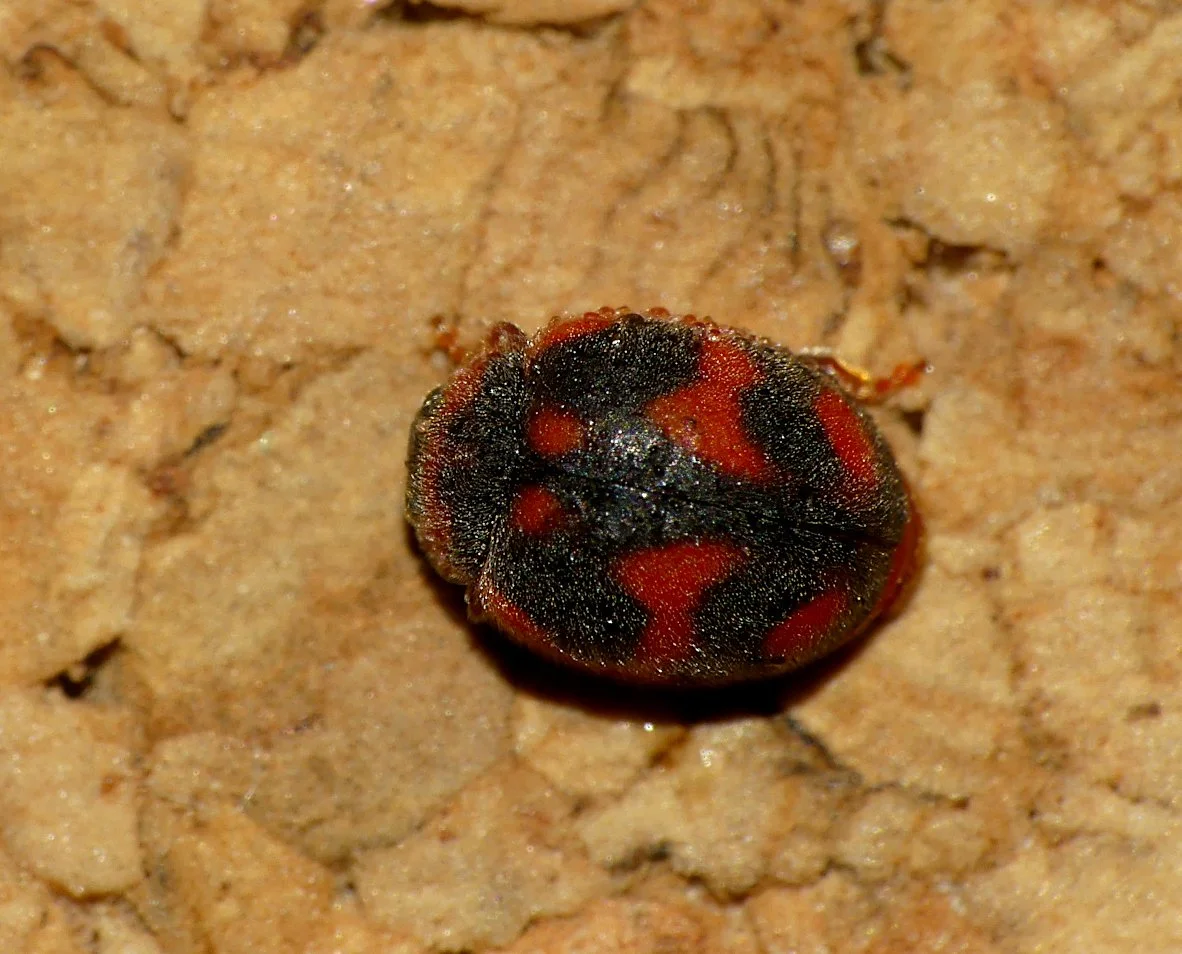
Vedelia Ladybird (Novius cardinalis) - La Garenne, 30 May 26
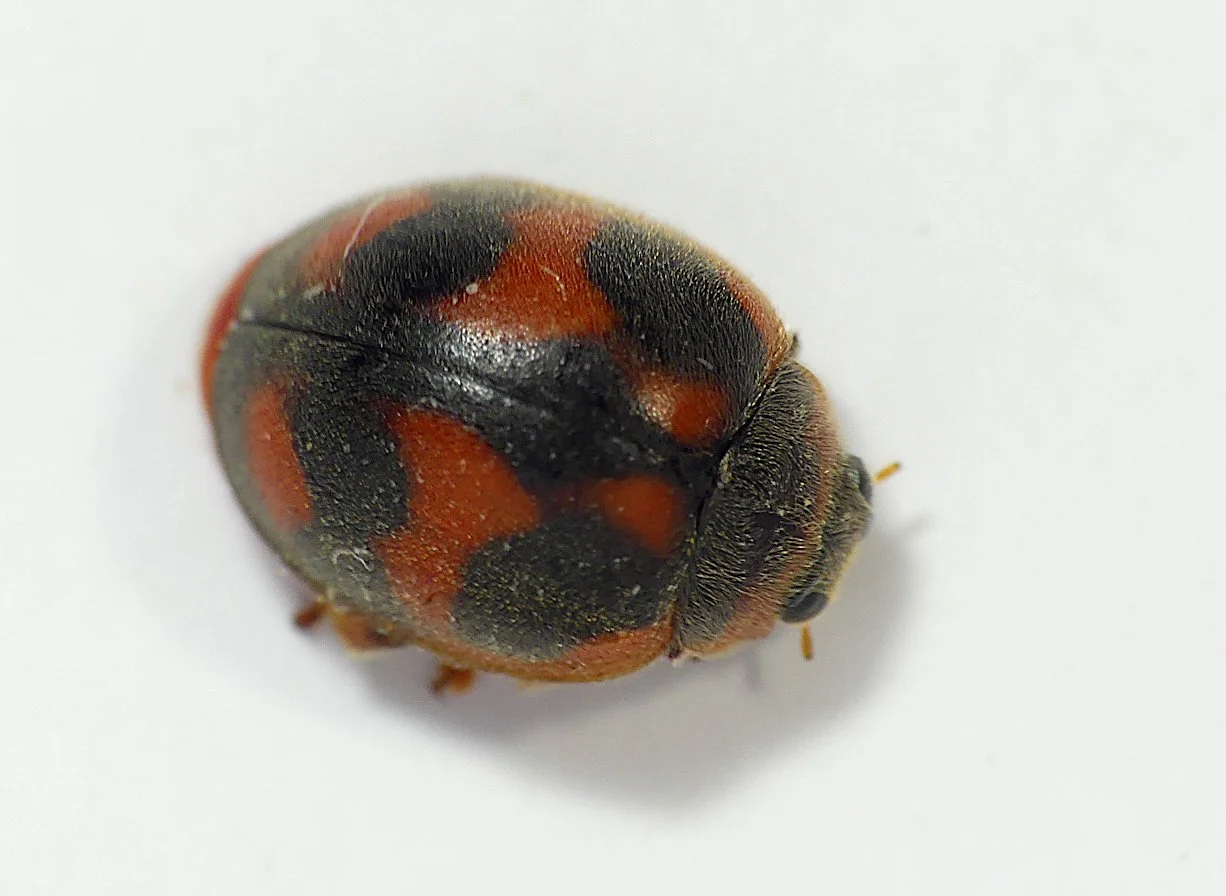
Vedelia Ladybird (Novius cardinalis) - La Garenne, 30 May 26
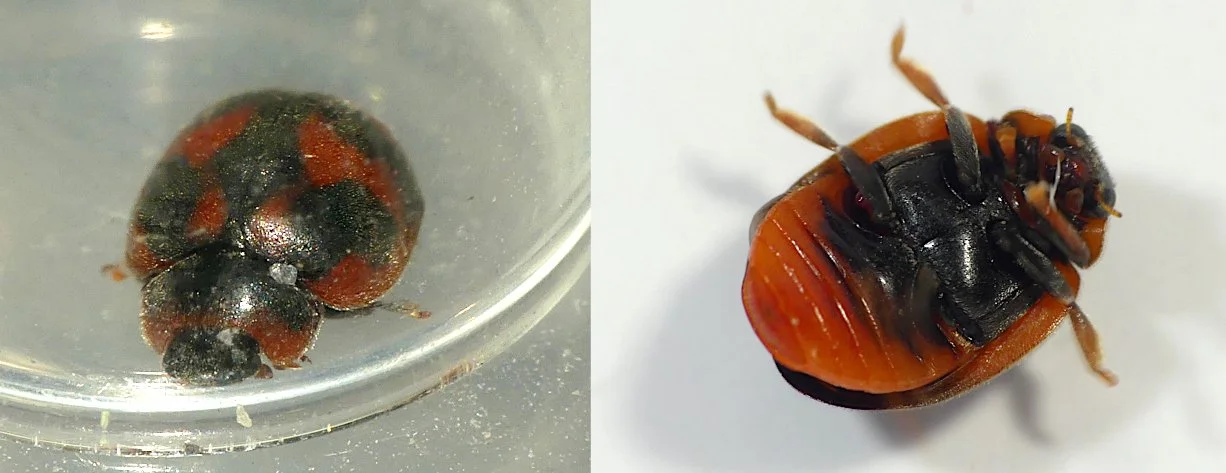
Vedelia Ladybird (Novius cardinalis) - La Garenne, 30 May 26
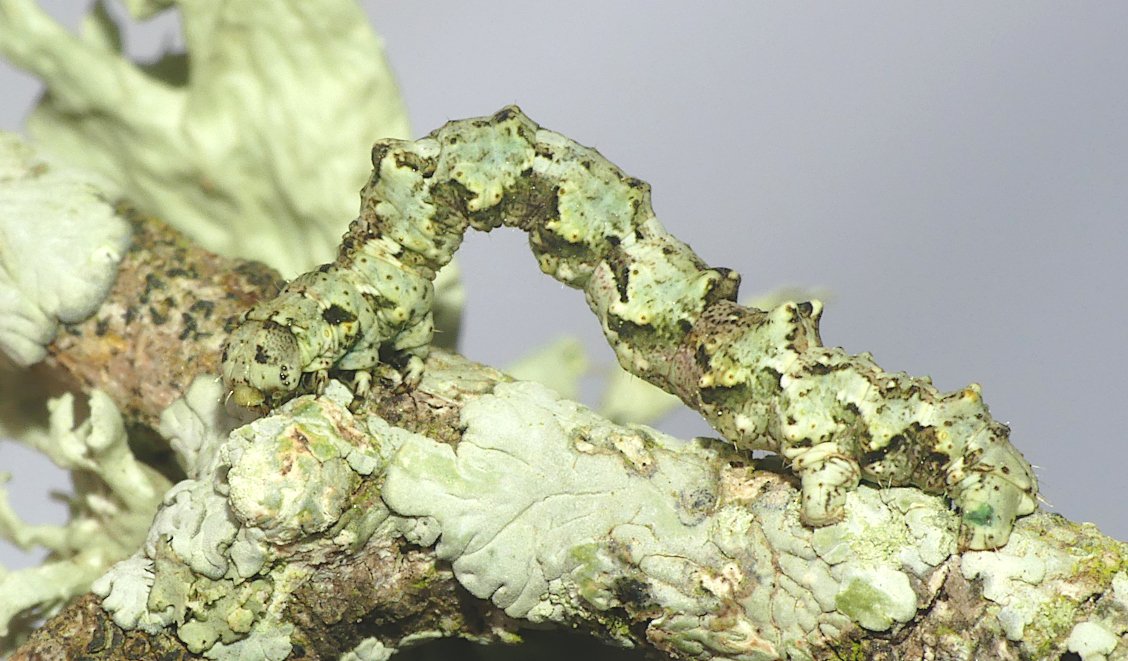
Brussels Lace larva - La Mare Huchon, 17 May 26 - a pretty good lichen camouflage
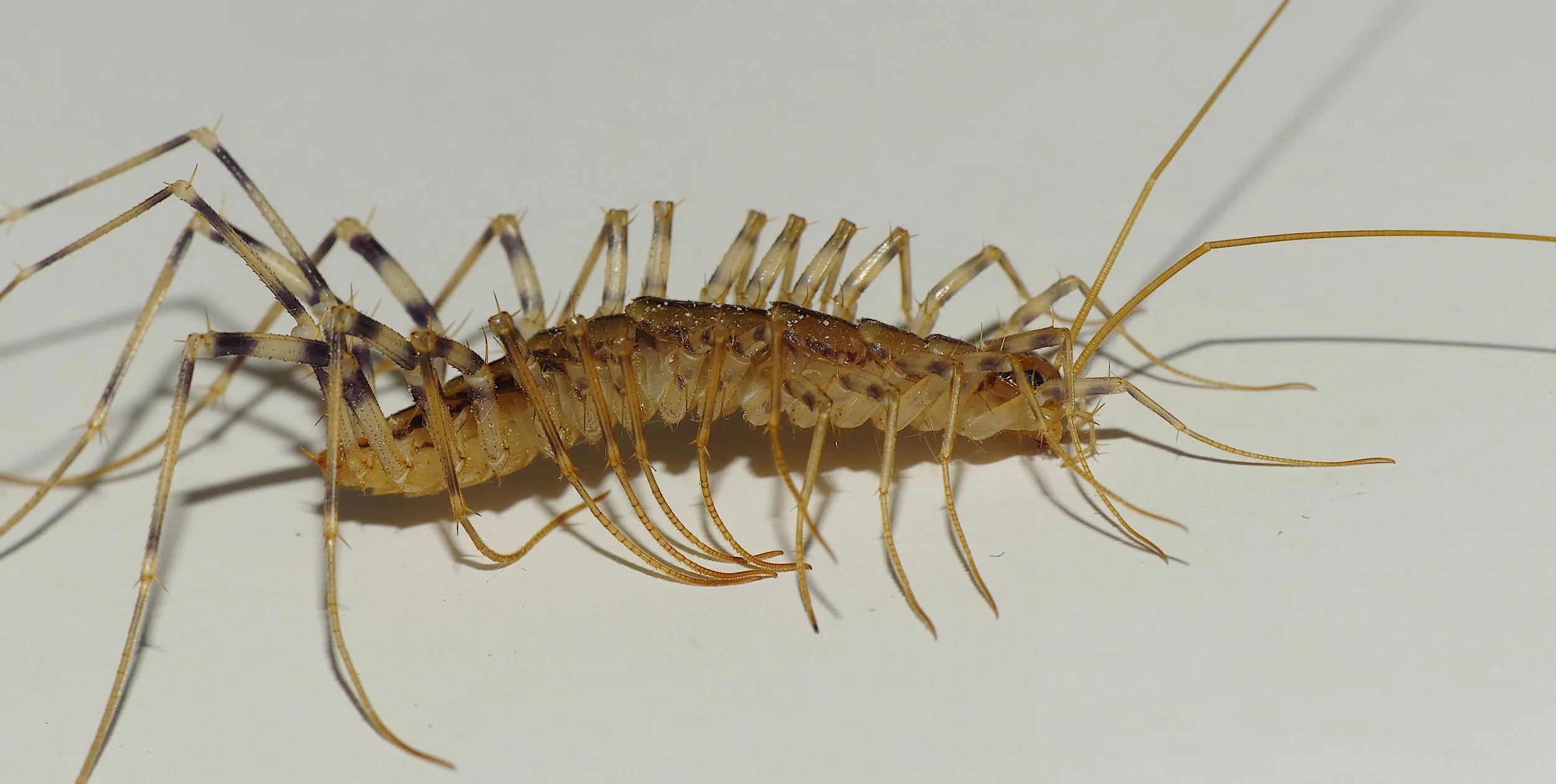
House Centipede - Les Beaucamps HS, 15 May 26 - we don’t get these round our house but I found this in the toilets at work. An absolute alien - this species must have appeared from space!
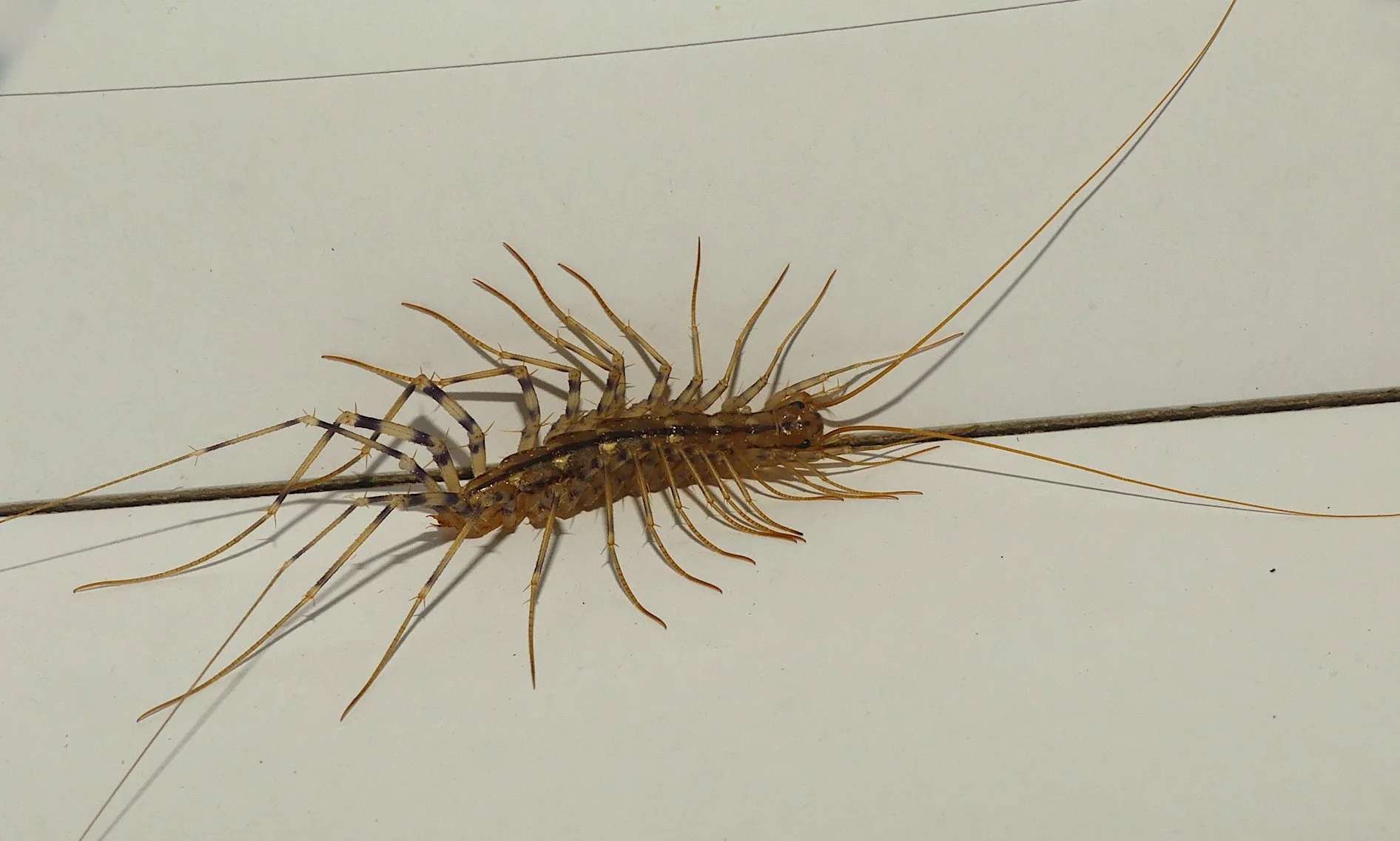
House Centipede - Les Beaucamps HS, 15 May 26
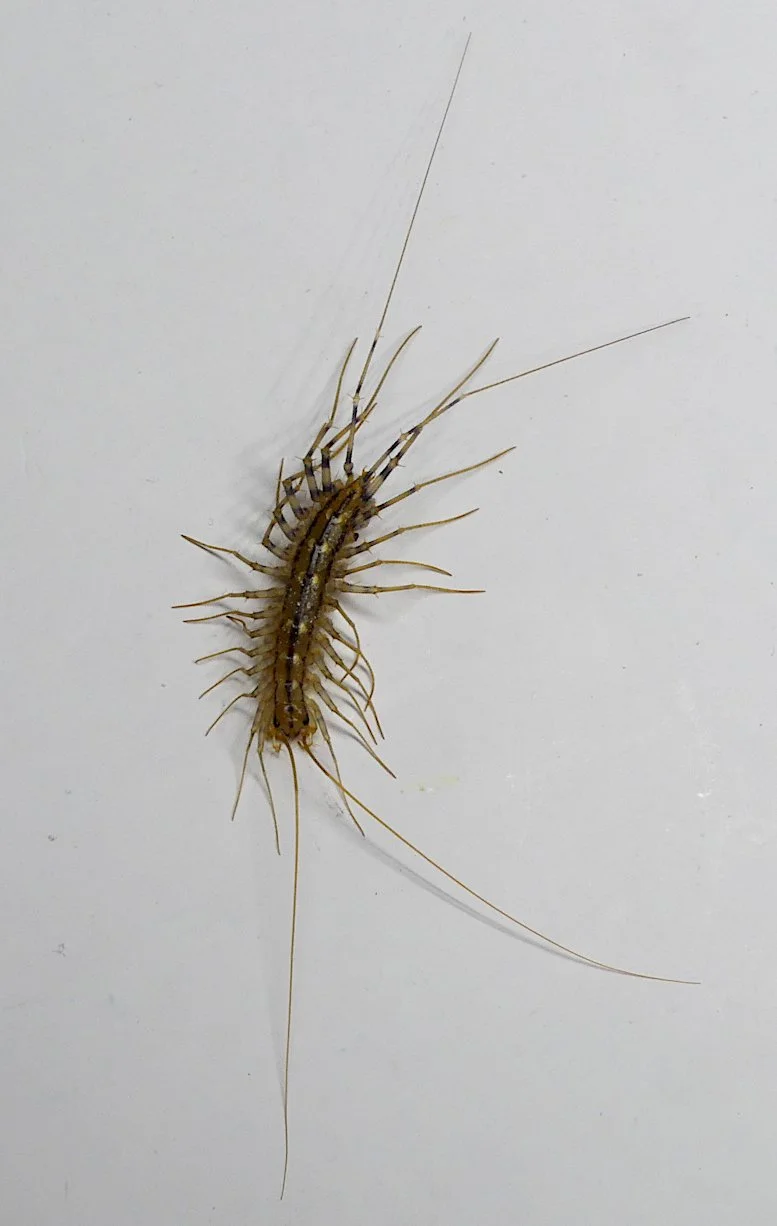
House Centipede - Les Beaucamps HS, 15 May 26