February 2026
/February is pretty quiet here in Guernsey, but every now and then, something big unexpectedly hits. Both the Royal Tern and the Bonaparte’s Gull were found in February and 2026 landed with another first for the island, a young Laughing Gull on 14th, on Perelle Beach. As soon as possible after hearing the news, I jumped in the car, but the Saturday afternoon traffic was so slow, and I was a few minutes too late. It had just flown eastwards towards Vazon, and it was not seen to land anywhere in particular. I remember when the Franklin’s Gull suddenly “flew East” and was never seen again! As usual, I went into major grump-mode after dipping and flustered around for the next few hours trying to re-find it. After a while I thought I could see it through my bins sat on the rocks off Richmond, but it was too far off to be sure and had to reach for my scope. Just as I was setting up, I saw it disappear around Fort Le Crocq and, despite more searching, I couldn’t find the blighter. I was not best pleased. I considered that Laughing Gull might be a one-off and was more annoyed at missing this than last year’s BW Kite, which I expect to occur again.
The overnight weather was absolutely atrocious, and it looked like it would continue into Sunday. I thought that it was a little unlikely that the gull would want to leave the island in such miserable conditions and, despite my desire to stay in a warm bed, I dragged myself up early morning to try and re-find it. The rain drizzled and the skies were lead grey, and there were very few gulls on the beaches of Vazon and Perelle when I stopped to scan. I carried on round towards L’Eree and, just as I rounded the bend at Catioroc, I noticed out of the rain-blurred windscreen, a small gull walking along the edge of the road! A little perplexed, I overtook the avian pedestrian, and U-turned further down. Driving back, I saw the bird again strolling up the path now, but being on a blind bend, I had to carry on to the small car park.
I scurried back with my bins, and the bird was now walking up the grassy path towards the dolmen. It was indeed yesterday’s Laughing Gull looking rather wretched in the wet. I was expecting a few painful hours of trying to find the bird when actually, the bird found me!
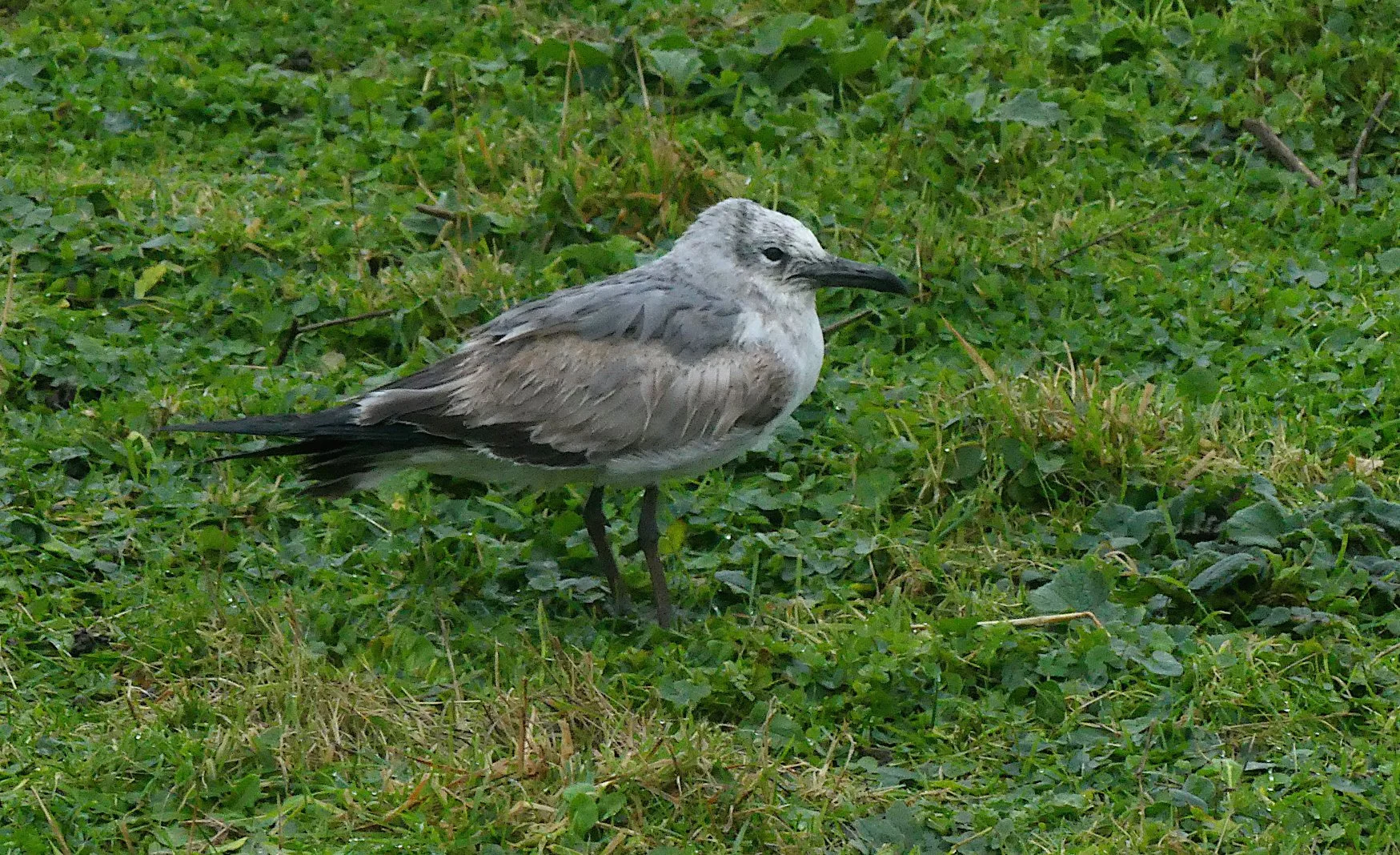
First-summer Laughing Gull - Catioroc, 15 Feb 26
The bird’s soggy face and bedraggled plumage made it look especially disgruntled, no doubt dreaming of a Florida beach. I tried to take some pics, but it was very difficult in the gloom and they are somewhat grainy. I was so pleased to claw this back after presuming I had missed it completely. Birding in Guernsey, you really need to get out there and re-find rarities yourself, as there won’t be throngs of birders searching for missing birds. I had only had Laughing Gull once before in the UK, so this was great to see, despite the bird itself being a little grotty. It didn’t have many plumage features to pick out due to wear, but the long body, long bill, dark legs and darkish mantle all are typical of Laughing Gull. This is now my 18th species of gull seen in Guernsey which is an amazing total. I suppose the next likely species is something like Ross’s or Audouin’s even.
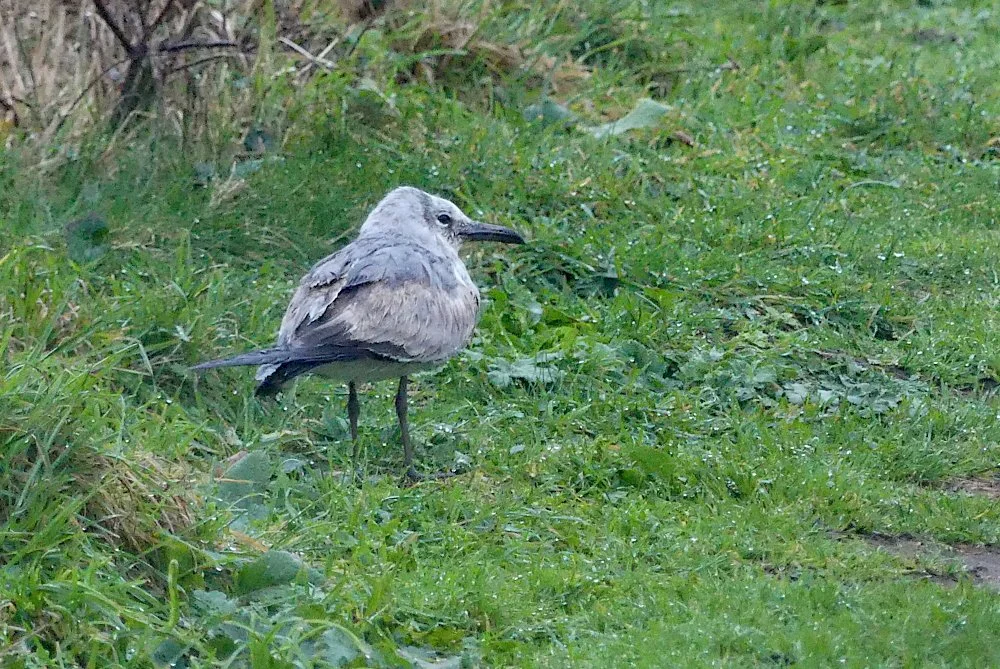
First-summer Laughing Gull - Catioroc, 15 Feb 26
I put the news out on the grapevine but, even though few people saw it yesterday, only Kevin came straight away - I suppose the weather may have been a factor. The bird now started walking back down the slope and towards me, almost coming right up to my feet. I was concerned that it needed rescuing and was considering trying to pick it up. However, it had enough energy to move away from me when I got close. It was finding some worms in the turf to eat so was perhaps getting some energy back.
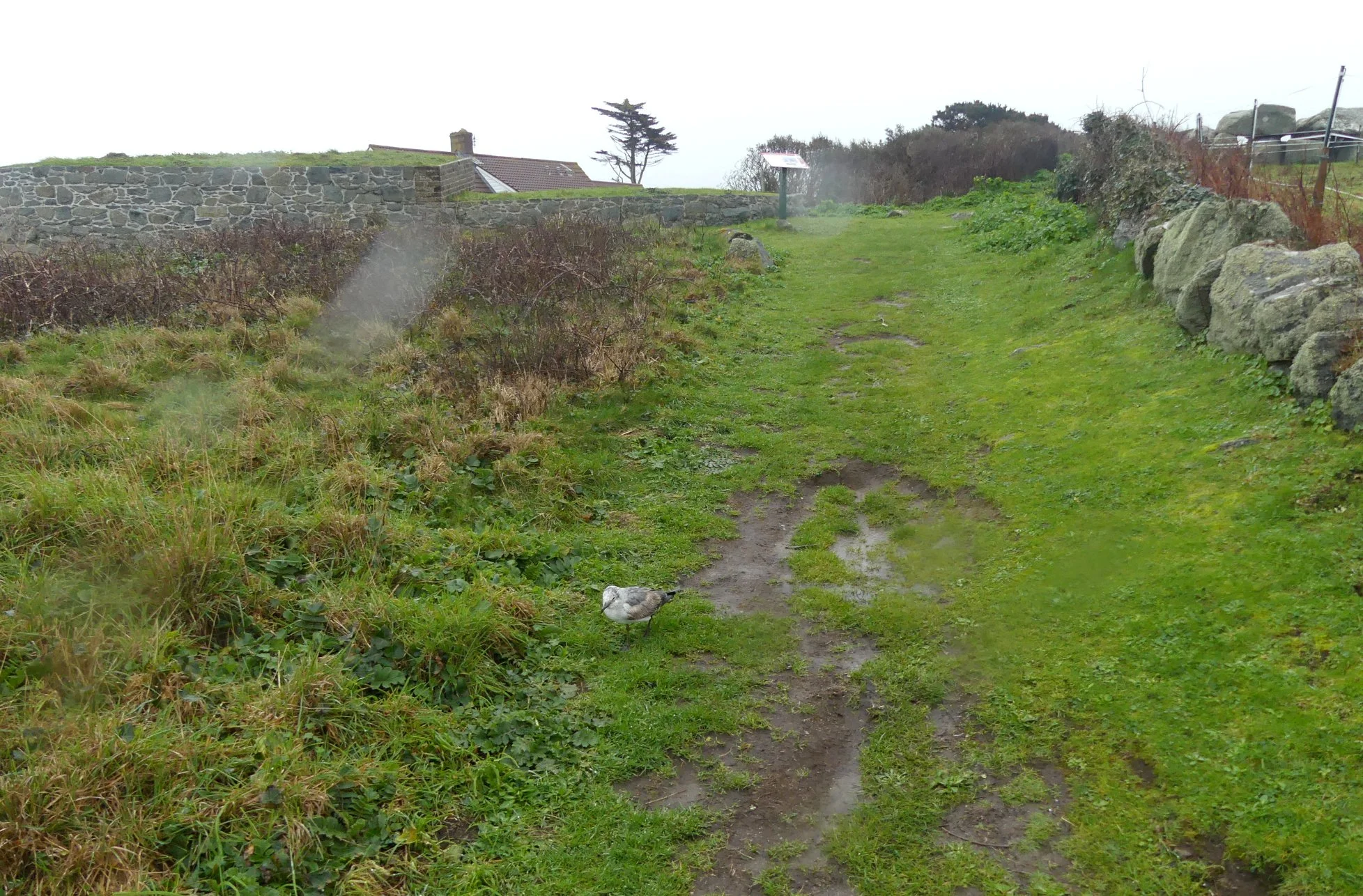
First-summer Laughing Gull - Catioroc, 15 Feb 26 - walking towards me!
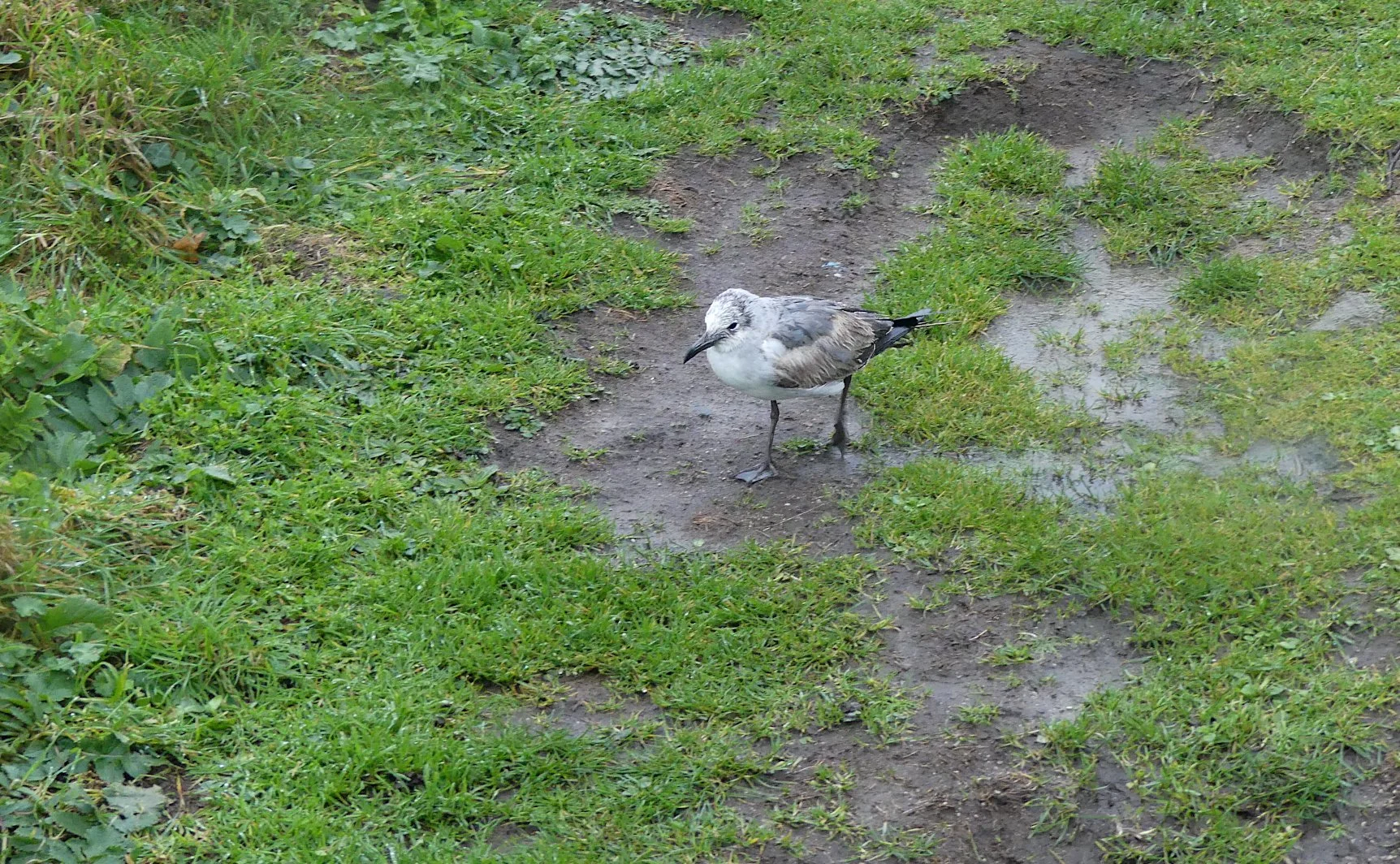
First-summer Laughing Gull - Catioroc, 15 Feb 26
My camera battery ran out, and I walked back to the car for a spare. I hadn’t noticed but the gull had followed me and was now in the middle of the road with a car approaching fast - Aaah! Luckily the car was driven by Chris M, who managed to spot it and very narrowly avoided a fatality. The bird flew up from just before the front wheel and over a fence into a field. We were concerned that it wasn’t going to last very long at this rate and Chris went back to the car to collect a net. We were going to try and catch it.
It flew over the road and landed at the water’s edge, so at least we knew it could fly a decent distance. However, a couple of crows decided it was fair game and swooped down, pecking at its head. I dived into action and ran across the shingle, slipping and falling into some rotten seaweed en route. I managed to scare the crows away, but I couldn’t grab the Laughing Gull, and it flew further across the bay and onto the exposed rocks. Now Chris had the net, we slogged out across the rocks for another attempt but couldn’t find it anywhere. We had walked past it, obviously hunkered down, and as we returned, it flew back over the sea wall and back onto the road. We thought it was bound to get run over so catching it seemed vital, but it was always a few steps ahead of us. We even followed into a garden where we shocked an old lady as she peeked out of her curtains to see a couple of weirdos creeping round her Hydrangeas.
We gave up in the end, and it eventually seemed to just disappear, and we saw it last by the entrance to the Claire Mare. It was looking a bit brighter and the weather was better, so we hoped for the best. There was no sign the next day, so I feared the worst. However, in the greatest comeback since Lazarus, it was seen in the same place five days later - Hurrah! It survived its ordeal and hopefully continued on its merry way.
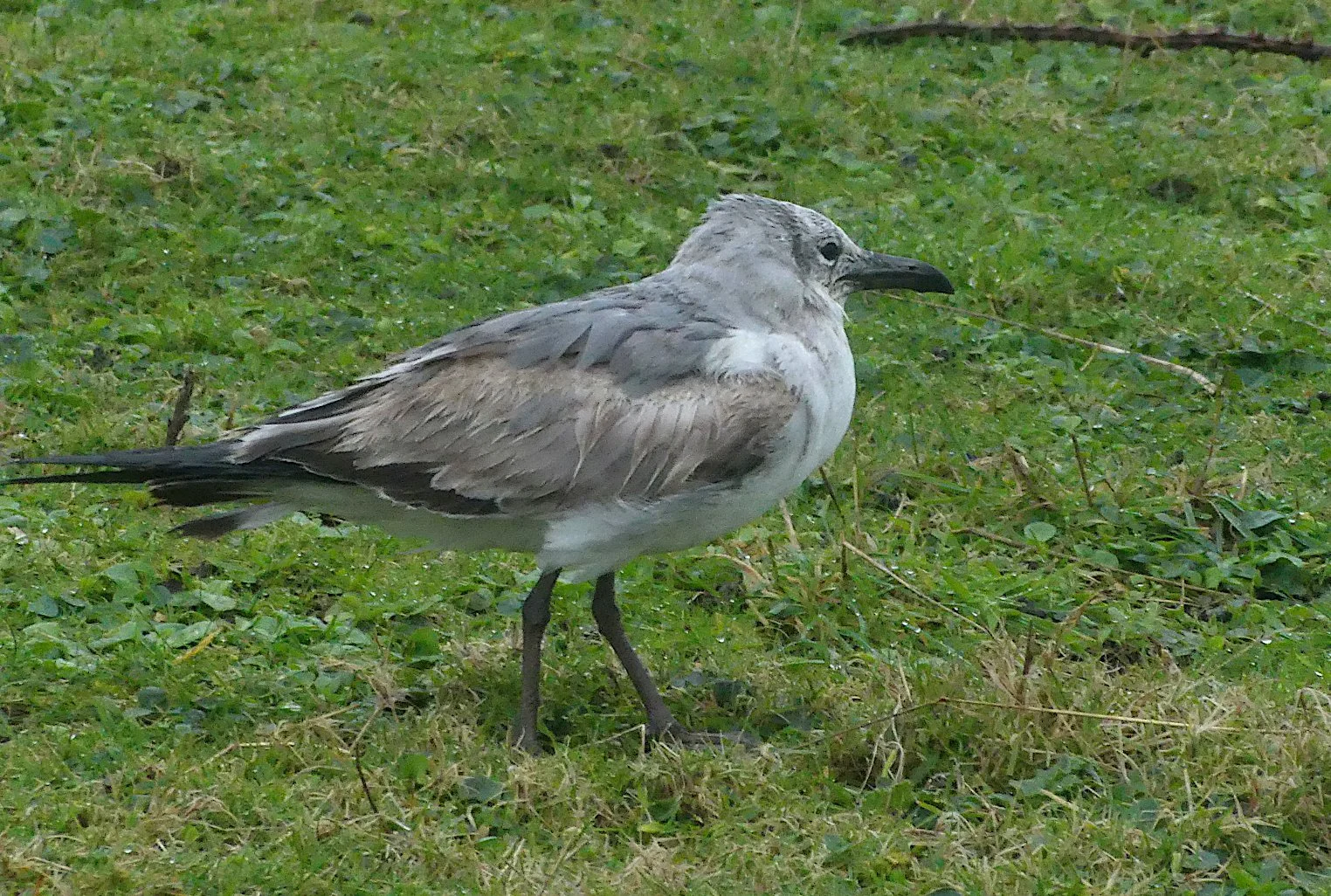
First-summer Laughing Gull - Catioroc, 15 Feb 26
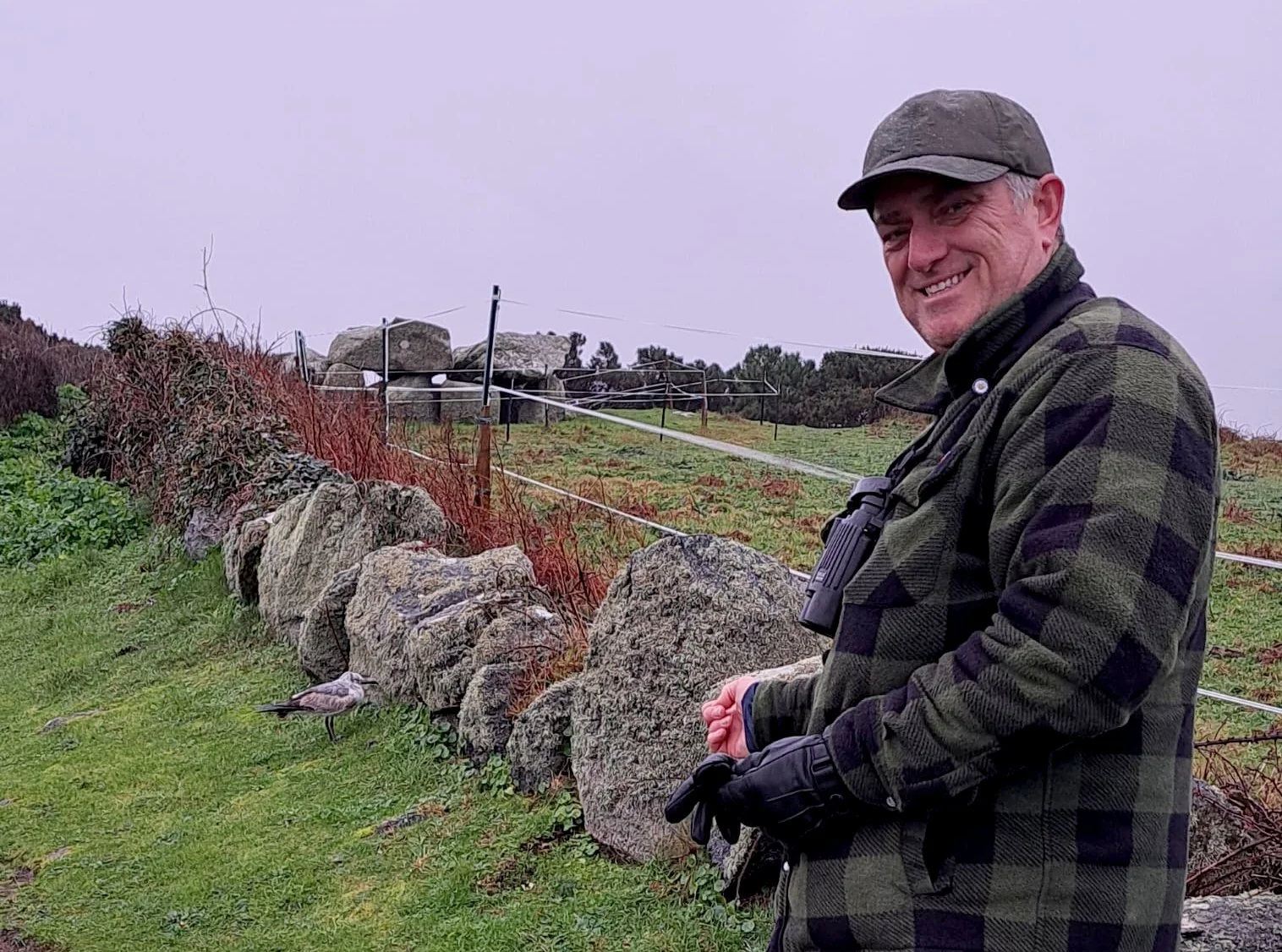
Laughing Gull, smiling fool
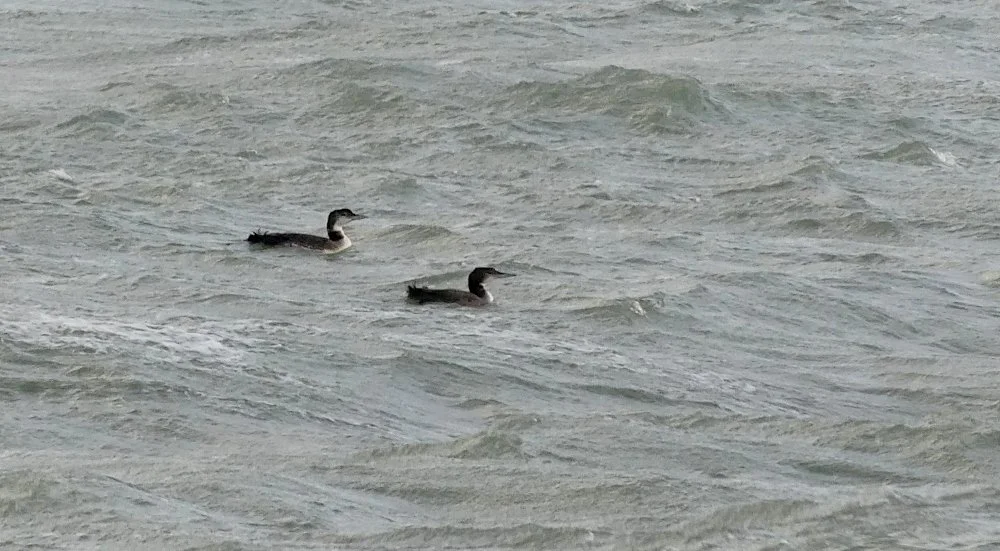
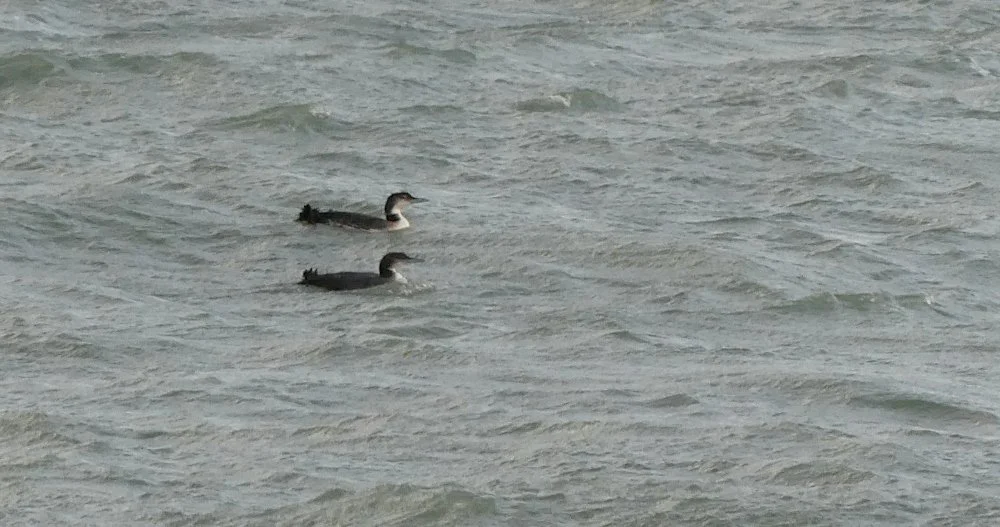
Nothing else much different occurred in February. I visited a few bays on the 18th and saw 4 different Great Northern Divers, as well as a pair of Red-breasted Mergansers fly East across Vazon Bay, which are pretty scarce here nowadays. With my determination to go see a few more reported birds this year, I popped to the Shingle Bank on 27th and saw the Grey Phalarope which had appeared there, although it was quite far away on the sea.
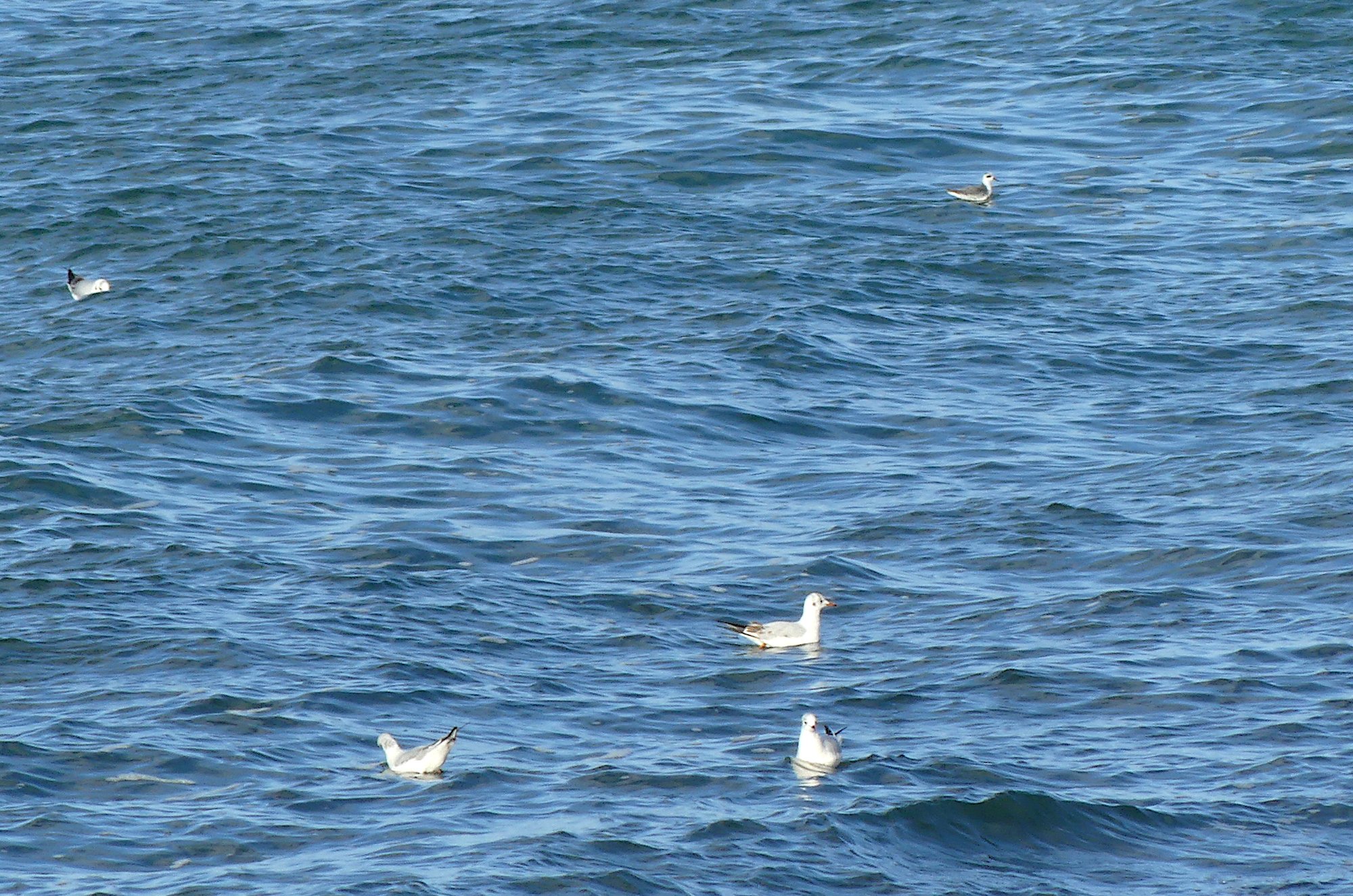
Grey Phalarope - L’Eree Shingle Bank, 27 Feb 26
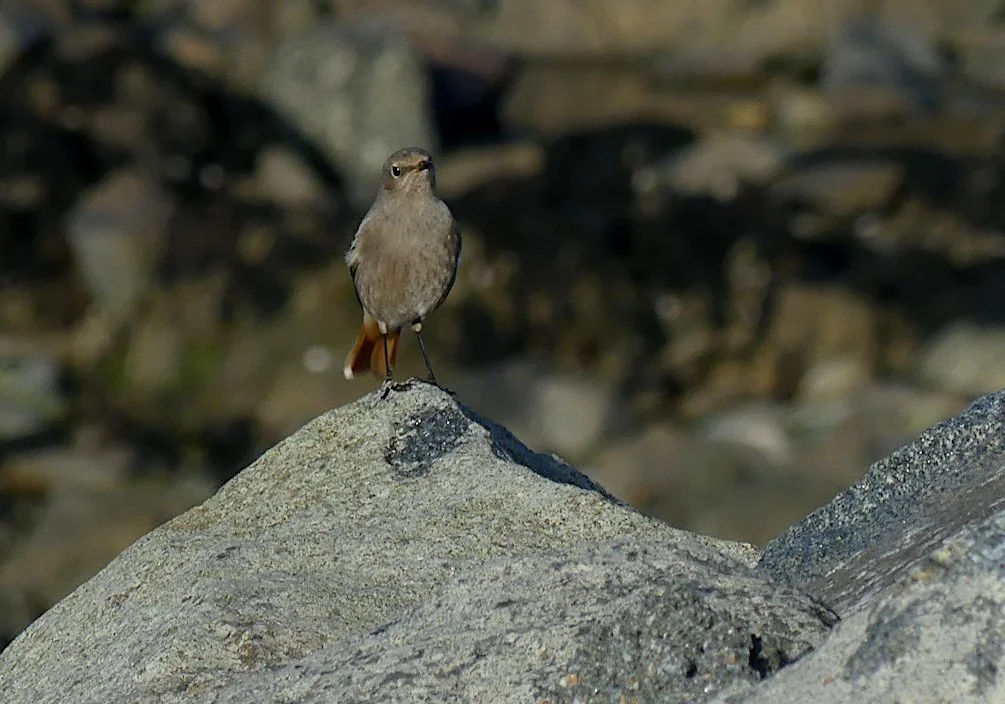
Black Redstart - Pulias, 6 Feb 26
I was desperate to try out my new moth trap set-up, with both MV and Actinic bulbs. So, with good weather forecast, I put out the trap on 25th February, much earlier than I usually do. I often don’t dig out the trap until May! And it was pretty successful with 15 moths of 10 species, not bad for so early. It included some species I rarely see like Oak Beauty and both Chestnut and Dark Chestnut, and also a migrant Small Mottled Willow. There was even a new species for me, Agonopterix propinquella, a.k.a. the Black-spot Buff. The main thing was that the electrics survived the extra bulb - which it did (for now).
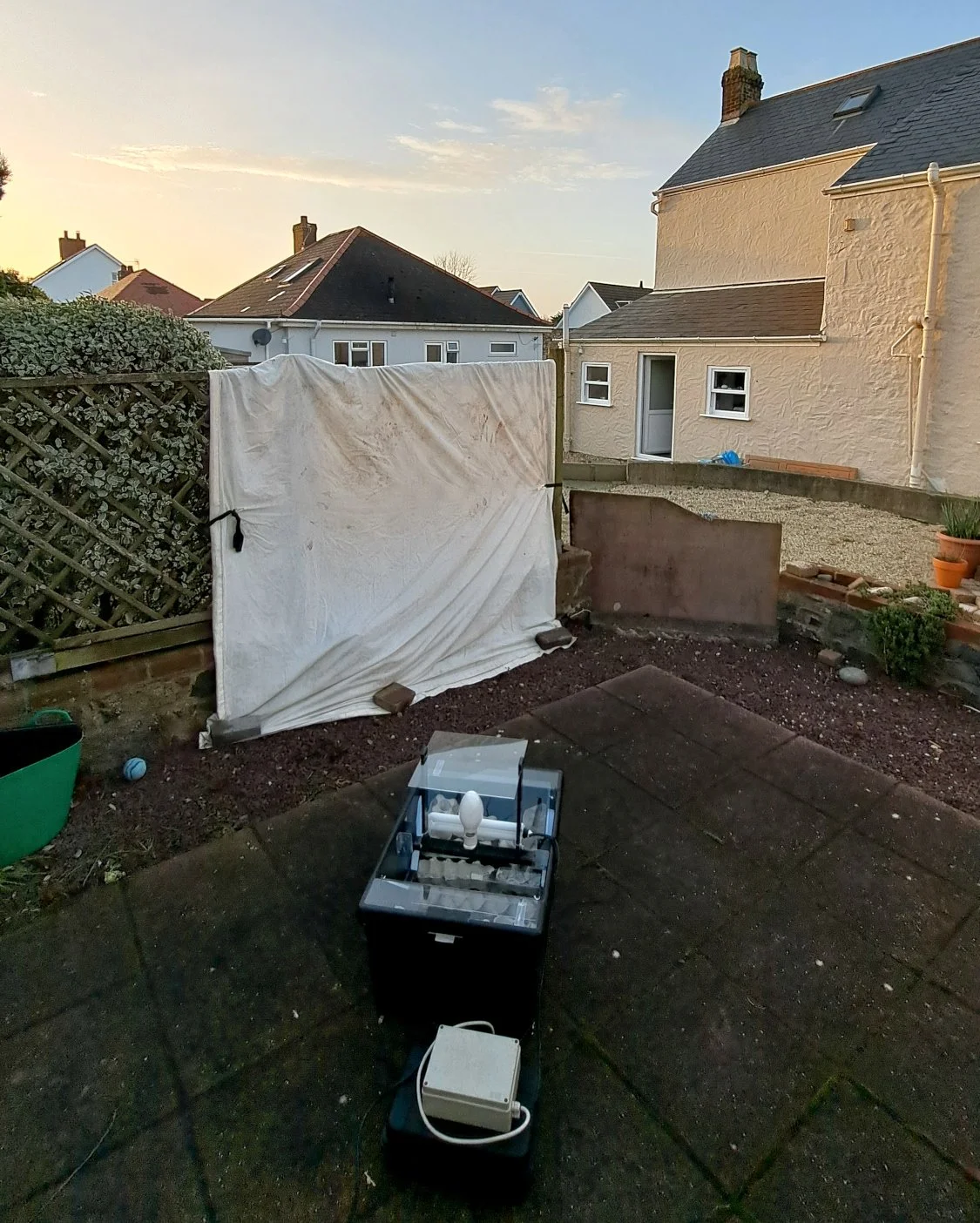
New moth trap set-up, with sheet to block the light from the neighbour’s window
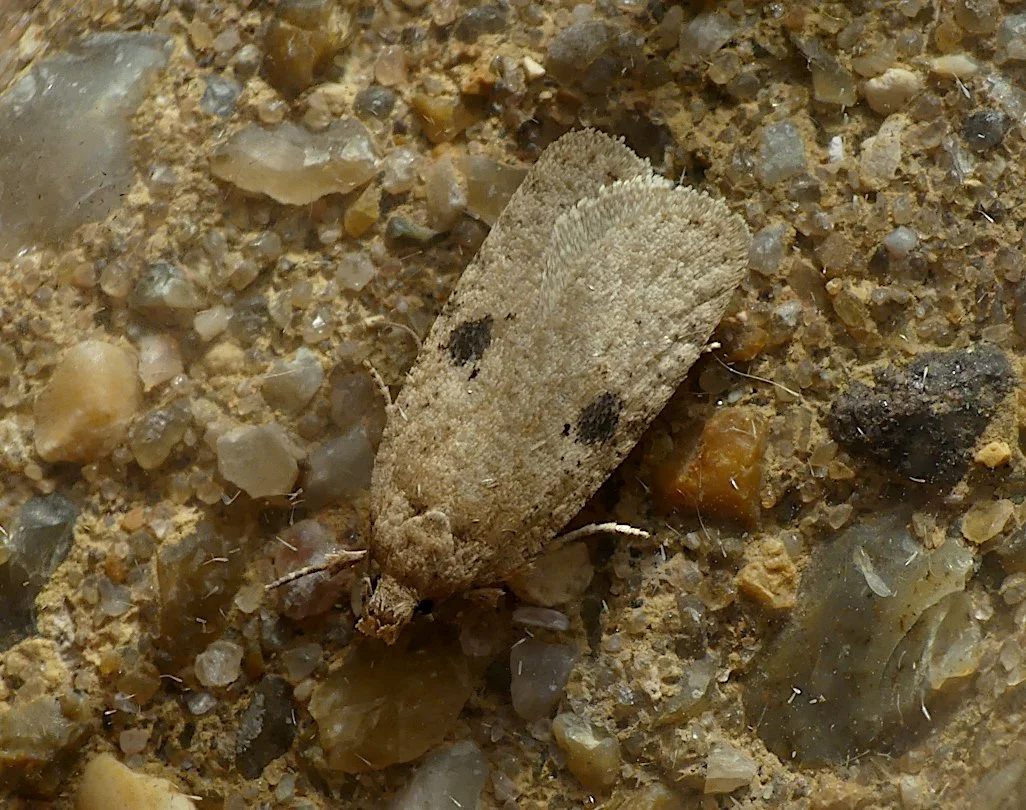
Agonopterix propinquella - garden, 25 Feb 26
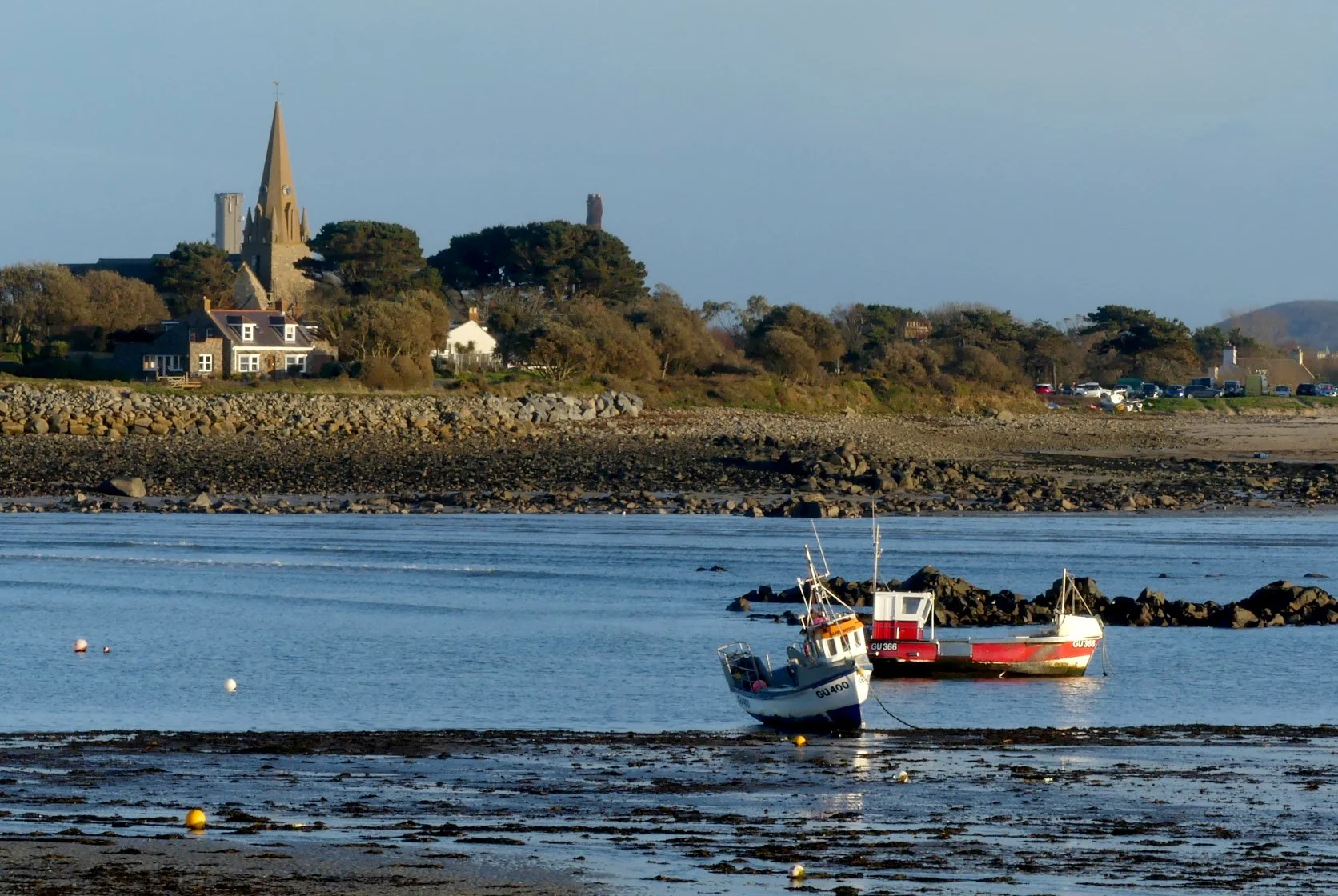
Grandes Havres - 7 Feb 26