August 2020 part i

calling Fulmar - Pelagic trip, 15 Aug 20

calling Fulmar - Pelagic trip, 15 Aug 20

15th August was the day of the annual Societe pelagic trip out into the Channel. Even though they are annual, for various reasons, I have rarely gone in the past but I am determined to go out on as many as possible from now on. When I went in 2017 I was really spoilt and I forced myself to temper my expectations for this year’s trip. As, by nature, these trips are unpredictable, they are always exciting as something could appear from nowhere.

We headed north out of the Russell and headed quickly NW towards the Hurd Deep. It is difficult to scan and spot anything when rushing out so quickly and the boat is moving so much, but we saw a couple of Manx Shearwaters cross the bow and a couple of Storm Petrels skip past. We didn’t have great views of Stormies this year as we didn’t have much chum to sling out and most sightings were of quick fly-bys.

We eventually reached the Hurd Deep and we headed for the vicinity of a French trawler, shouting bonjour across the water to them. There were lots of Gannets, Fulmars and gulls around and we cut the engines and threw some bits and bats of food off the side to get the birds close to the boat. We soon saw our first Bonxie appear and it was a very small and pale bird, seemingly with very worn plumage and it hid amongst the gulls well. It gave very close views around the boat.

Bonxie - Pelagic, 15 Aug 20

Bonxie - Pelagic, 15 Aug 20

Bonxie - Pelagic, 15 Aug 20

Bonxie - Pelagic, 15 Aug 20

Bonxie - Pelagic, 15 Aug 20

Bonxie - Pelagic, 15 Aug 20

The gulls that were around were an interesting mix. Lots of Lesser Black-backeds, some Great Black-backeds and very few Herrings. We picked out quite a few juvenile Yellow-legged Gulls close to the boast, picked out mainly by their worn plumage, pale head and chunky bill.

Juvenile Yellow-legged Gull - Pelagic trip, 15 Aug 20

Juvenile Yellow-legged Gull - Pelagic trip, 15 Aug 20

One of these birds seemed to stand out even more than the rest and we mused whether it might be a Caspian Gull. It had a small head and slender proportions, and a tertial pattern that seemed spot on for that species. It was always easy to pick out due to an unusually pale tip to the bill. We took lots of photos of the bird and studied the photos at home. I couldn’t really see any features that totally ruled out a Caspian Gull, although even on the pictures below the greater coverts look rather chequered. Much more expert people on the internet considered the bird and thought it was much more likely to be a small, pale Yellow-legged Gull and we were happy to go along with that conclusion. Further research on the internet led us to the read about the NW Iberian race of Yellow-legged Gull (lusitanius) which is a smaller race than the birds elsewhere in Europe and - well-spotted by Wayne - a great many photos of first-year lusitanius show a pale tip to the bill. Perhaps this is a genetic trait of this race? We’ll never know of course but it was an interesting observation.

Mystery Gull sp. - Pelagic, 15 Aug 20

Mystery Gull sp. - Pelagic, 15 Aug 20

Mystery Gull sp. - Pelagic, 15 Aug 20

Mystery Gull sp. - Pelagic, 15 Aug 20

After bobbing around the trawlers for a while we slowly travelled south-west, eventually passing round the Hanois lighthouse, following the south coast before heading home. We saw about 15 Storm Petrels altogether and a similar number of Balearic Shearwaters which were more common close in off the south coast. There were 3 Bonxies in total and we had a few groups of terns pass by which were mostly Common Terns, although we did have two sightings of Black Tern: 2 adults passing NW of Guernsey, and 2 juveniles not too far off the Hanois. We did not see any cetaceans although a very distant jumping thing may have been a dolphin or a large tuna. One species which was quite common was Ocean Sunfish and we saw them regularly, totalling about 20 perhaps. These were just the ones close to the boat so there must have been thousands out there. So although we did not see any rarities, it is always a thrill to get out into the sea in a small boast and the Fulmars were just terrific, calling and swimming so close to the boat.

Black Terns - Pelagic, 15 Aug 20

Black Terns - Pelagic, 15 Aug 20

Ocean Sunfish - Pelagic trip, 15 Aug 20
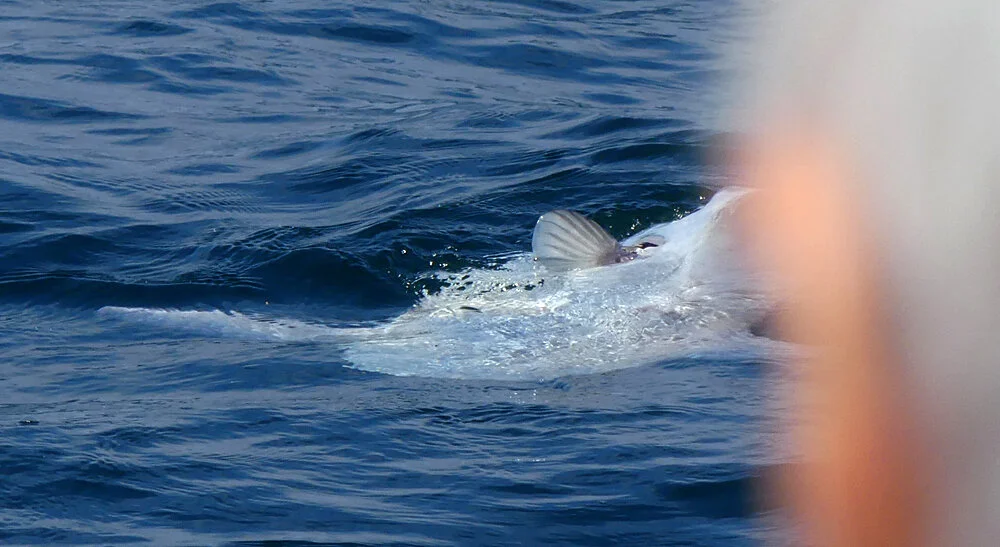
Ocean Sunfish - Pelagic trip, 15 Aug 20

Ocean Sunfish - Pelagic trip, 15 Aug 20

Ocean Sunfish - Pelagic trip, 15 Aug 20

Ocean Sunfish - Pelagic trip, 15 Aug 20

Ocean Sunfish - Pelagic trip, 15 Aug 20

Fulmar - Pelagic, 15 Aug 20

Fulmar - Pelagic, 15 Aug 20

Fulmar - Pelagic, 15 Aug 20

Fulmar - Pelagic, 15 Aug 20

Fulmar - Pelagic, 15 Aug 20

Fulmar - Pelagic, 15 Aug 20

“Nothing to see here…. Just us gulls…. Minding our own business…. Tum-ti-tum…. “

“Nothing to see here…. Just us gulls…. Minding our own business…. Tum-ti-tum…. “

The light looking over the north side of the Little Russel

The light looking over the north side of the Little Russel

Autumn migration is now slowly picking up and my bins have now migrated from inside my field bag to round my neck. A couple of trips to Pulias have resulted in returning Reed Warbler, Whimbrel, Wheatear and Redshank on the headland. On my ‘insect’ walk circuit from Moulin Huet to Le Vallon and back on 3rd August, I had excellent views of a Great Spotted Woodpecker in the wooded valley south of Le Vallon - perhaps a range expansion, and perhaps they bred nearby this year. Also two different Firecrests, showing how much they have become common. The biggest surprise was the discovery of a pair of Collared Doves nesting in the grapevine right above the path in the back garden. Shows what an observant birder I am that it was only when the chicks got to the size they are below that I actually noticed the nest, despite it being about 6 inch above my head every day.

Collared Dove chicks in the nest - garden, 6 Aug 20

Collared Dove chicks in the nest - garden, 6 Aug 20

The first half of August was great for the moth trap with warm weather bringing in the species. The 11th August was the busiest night with a minimum of 104 species attracted to the garden, the highlight being the amazing Pyrausta purpuralis, a new species for me, and one I have been expecting to find for ages. Other good records for that night were 3 Coleophora salicorniae (a saltmarsh micro), my first Bucculatrix albedinella for 13 years, and 3 of the migrant micro Cydia amplana.

Pyrausta purpuralis - garden, 11 Aug 20

Pyrausta purpuralis - garden, 11 Aug 20

Bucculatrix albedinella - garden, 11 Aug 20

Bucculatrix albedinella - garden, 11 Aug 20

Other excellent moth-trapping records included my second Jersey Mocha on 5th, just ten days after my first, Palpita vitrealis on 9th and 15th, and a Oncocera semirubella on 13th. Another new species of moth for me was a Phyllonorycter mespilella which emerged from a tiny mine in a Pear leaf collected at St Sampsons HS conservation area in July. Its nice to photograph such tiny moths when they are freshly emerged and bright.

Phyllonorycter mespilella - emerged from a mine in a Pear leaf collected at St Sampsons HS in July - a new species for me

Phyllonorycter mespilella - emerged from a mine in a Pear leaf collected at St Sampsons HS in July - a new species for me

On 7th August the Societe entomologists took some traps to the reedbed reserve at Grand Pre to try and catch some specialist species. As well as netting and using sheets in the evening, we went down the next morning to see what was in the traps. We had plenty of wainscots inculding Brown-veined, Twin-spotted, Webb’s and Fen, plus lots of Limnaecia phragmitella and Calamatropha paludella. I do get some of these reedbed species in my moth trap at home on occasion, I suppose due to living relatively close to the Track Marais. Other good species included a Splendid Brocade and my first Guernsey Chevron. In the half-light I netted a couple of Cochylidia rupicola, a tortrix rarely recorded before. We would definitely find more species of moth by doing more in-the-field mothing but with all the equipment required, it is somewhat a palaver! I collected up a few bits and bats from the sheets and found a few new species for me, including the bracken-feeding sawfly Aneugmenus temporalis, the mud-beetle Heterocerus fenestratus and an iris leaf-mining fly Cerodontha iraeos, which all look to be new for Guernsey according to the spreadsheets.

One of the traps in the Grand Pre reedbed, 7 Aug 20
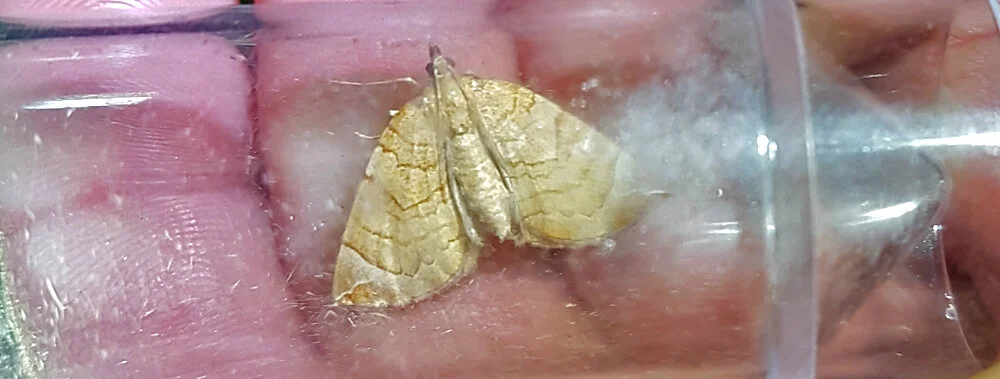
One of the traps in the Grand Pre reedbed, 7 Aug 20

Chevron - Grand Pre, 7 Aug 20

Chevron - Grand Pre, 7 Aug 20

On 3rd August it was a lovely day and decided to do a new walk, Moulin Huet to Le Vallon and back through the green lanes. The bare banks of the paths were productive with two new spider hunting wasps - the hulking Aporus unicolor and Evagetes siculus, a Channel Islands speciality - plus a male and female Dark Blood Bee (Sphecodes niger) which I cannot see on the Guernsey list. The most intriguing critter was a bug that was quite common on a patch of Enchanter’s Nightshade by the road near the bottom of Moulin Huet. Looking it up it was clearly a species of Dicyphus but these bugs can usually be identified by the foodplant, and none of them are listed as being on Enchanter’s Nightshade. It also had a couple of unusual physical features, especially the double-banded first segment to the antennae. I the end I got in touch with a couple of experts and they thought that it could be D. tamaninii or D. bolivar. This genus is apparently confusing because they can have recently been used by gardeners/farmers for biological control to get rid of pests. Anyway, it was interesting enough for a couple of specimens to be currently winging their way to Holland to be DNA analysed by an expert entomologist.

From the path above Moulin Huet, 3 Aug 20

From the path above Moulin Huet, 3 Aug 20

Enchanter’s Nightshade - Moulin Huet, 3 Aug 20

Enchanter’s Nightshade - Moulin Huet, 3 Aug 20

Dicyphus sp. - Moulin Huet, 3 Aug 20

Dicyphus sp. - Moulin Huet, 3 Aug 20

Comma larva - Le Vallon, 3 Aug 20 - I always find this species on elm rather than nettle

Comma larva - Le Vallon, 3 Aug 20 - I always find this species on elm rather than nettle

July 2020

“And the award for the most underwhelming twitch of the century goes to an Egyptian Goose at the Reservoir…..”

During mid-July an Egyptian Goose appeared briefly at Claire Mare three times but never settled, so I never needed to really think about it too much (although I did spend a short time searching for it one weekend). However, on 24th I heard that it was settled at the Reservoir and so I thought that I should really go and see it. I can’t really think of a particular reason why this bird cannot be counted as new to Guernsey since it is now so widespread in the UK and parts of NW Europe and is expanding all the time - we saw plenty in Hampshire when we went a few years ago. It is most likely to be a bird from one of these feral populations that has wandered post breeding season. It wasn’t ringed or clipped and we’ve not had a history of Egyptian Geese appearing before (unlike Mandarin which has a history of random records here). So I’ve provisionally added it to my Guernsey List but it depends on the deliberations of the Rarities committee.

Egyptian Goose - Reservoir, 24 Jul 20

Egyptian Goose - Reservoir, 24 Jul 20

Egyptian Goose - Reservoir, 24 Jul 20

Egyptian Goose - Reservoir, 24 Jul 20

Egyptian Goose - Reservoir, 24 Jul 20

Egyptian Goose - Reservoir, 24 Jul 20

Quite why I decided that walking along the length of this log was worth it to get decent photos of the egyptian Goose, I’ll never know. Due to my extensive gymnastic training I managed not to fall in the water.

Quite why I decided that walking along the length of this log was worth it to get decent photos of the egyptian Goose, I’ll never know. Due to my extensive gymnastic training I managed not to fall in the water.

July was as usual focussed on insects rather than birds, and so I rarely picked my bins out of my bag. I called in to Pulias a few times for some local-patching and saw a couple of Balearic Shearwaters on 15th and a group of 5 smart, returning Sanderlings on 22nd.

In preparation for autumn migration I made a purchase during the month - a sound recorder. I can record bird sounds on my phone fine but this is different. The idea is that this is a continuous recorder that records everything whilst you are out birding. I am still very basic when it comes to bird calls and songs and so many times when I’m out on the headlands I hear something and think “that sounds like an *uncommon species* ”. But the problem is that I can never remember the call, even just seconds later. I can go straight to the phone app, play the example call, but then I can’t decide whether the call I heard is the same or not just from my memory. I don’t know whether it’s a common thing, but I can’t hear sounds in my head. I can close my eyes and picture birds in my head in quite detail, but sounds are simply not there. When I’m out in the field I can pick out a call of a Tree Pipit overhead, which I guess is just from habit, but sitting here now and trying to think what a Tree Pipit sounds like, I cannot. So with this, if I do hear something I think might be good and the bird flies off, I can note down the time and look over the recording at home. Also, if a rare bird does turn up and only a recording of the call will clinch identification, I am more likely to catch it using this system, rather than fumbling for my phone in my pocket, by which time it will have shut up. I’ve attached a little pouch to my bag strap and so the recorder is sticking up above my back - it looks like I have a furry friend perched on my shoulder!

sound rec.jpg

Anyway, I took the recorder out for a trial run on 11th July, walking to the Track from home and the first birds I recorded on it were a family party of Firecrests just 100 yards down the road from my house. The male bird which I could hear singing in the spring from the garden must have found itself a mate and I saw at east two juvenile Firecrests plus two more birds in the trees by the traffic lights - recording below. This is the first time I’ve heard of Firecrests breeding in my area and the species has now almost totally colonised the island.

Little Egret - Reservoir, 17 Jul 20

Little Egret - Reservoir, 17 Jul 20

Juvenile White Wagtail - Claire Mare, 17 Jul 20

Juvenile White Wagtail - Claire Mare, 17 Jul 20

Juvenile Black-headed Gulls - Jaonneuse beach, 31 Jul 20

Juvenile Black-headed Gulls - Jaonneuse beach, 31 Jul 20

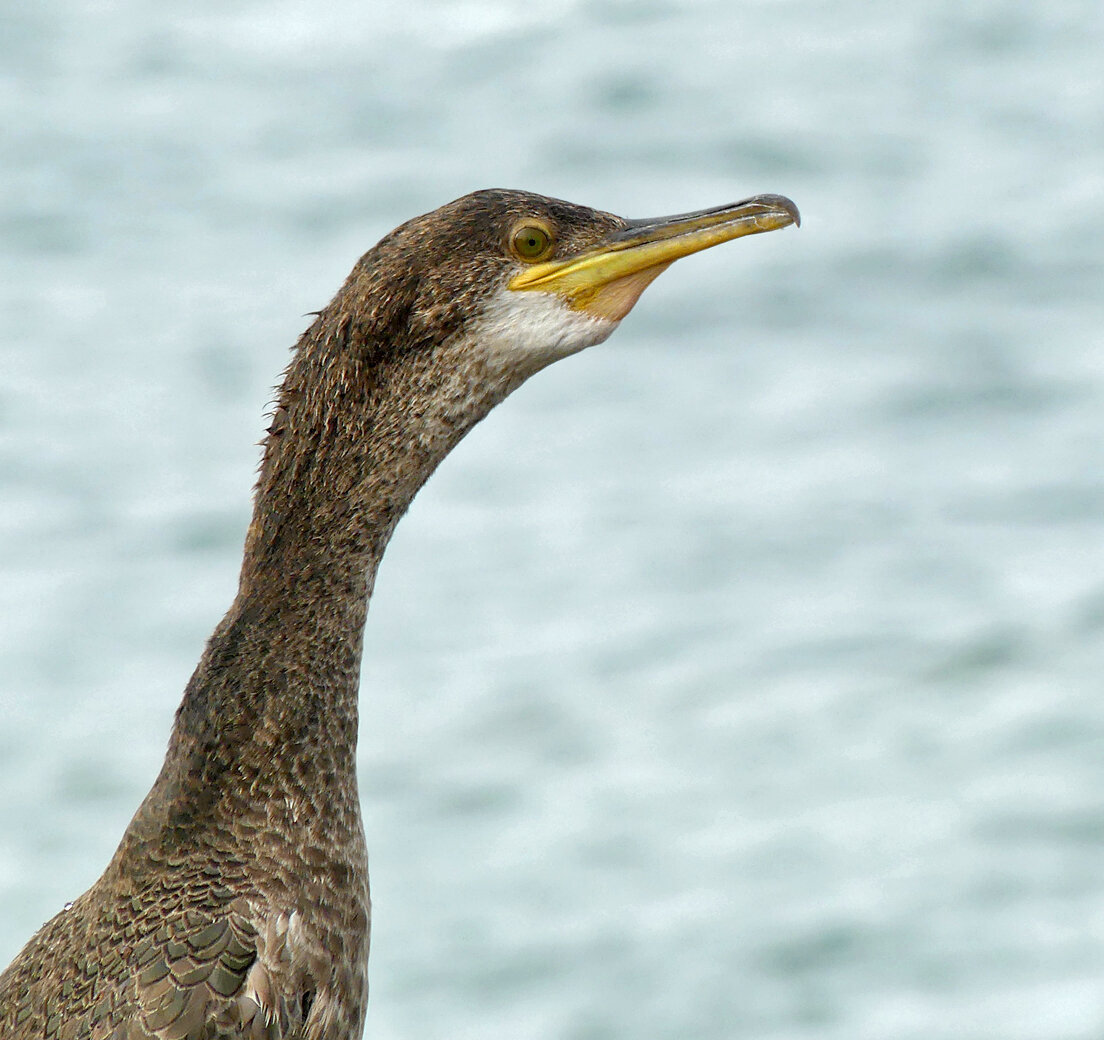
Shag - Jaonneuse, 31 Jul 20

Shag - Jaonneuse, 31 Jul 20

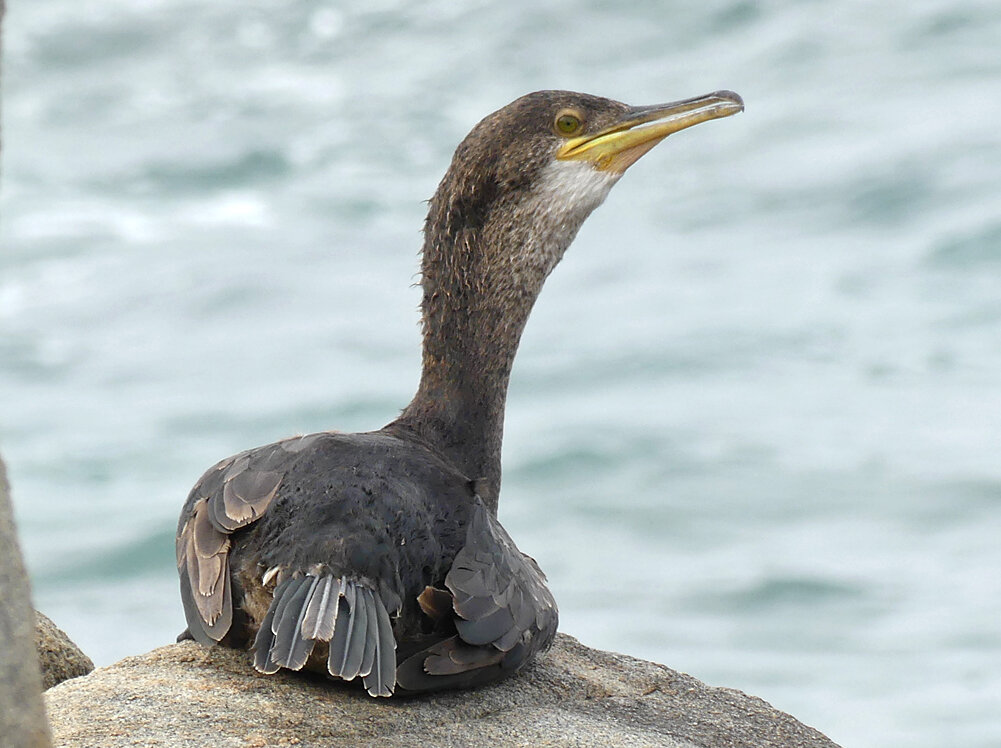
Shag - Jaonneuse, 31 Jul 20 - note the mixture of fresher dark green feathers and old, worn browny ones on the mantle

Shag - Jaonneuse, 31 Jul 20 - note the mixture of fresher dark green feathers and old, worn browny ones on the mantle

Shag - Jaonneuse, 31 Jul 20

Shag - Jaonneuse, 31 Jul 20

For most of July moth trapping was quite poor for the time of year but an Enarmonia formosana (Cherry Bark Tortrix) on 20th was new for the garden. The last few days of the month were better and a new macro for me was Jersey Mocha on 26th which I have been expecting for the last few years due to the increase in local records. On 29th I saw only my second ever Wax Moth and the 30th it was a very busy night with warm muggy temperatures and about 90 species. Amongst these was an unfamiliar and unspectacular tortrix which turned out to be a Cydia medicaginis (Alfalfa Moth) which appears to be a new species for Guernsey.

Jersey Mocha - garden, 26 Jul 20 - note the white spots on the forewing with no dark borders

Jersey Mocha - garden, 26 Jul 20 - note the white spots on the forewing with no dark borders

Cherry Bark Tortrix (Enarmonia formosana) - garden, 20 Jul 20

Cherry Bark Tortrix (Enarmonia formosana) - garden, 20 Jul 20

Cydia medicaginis - garden, 30 Jul 20

Cydia medicaginis - garden, 30 Jul 20

Wax Moth - garden, 29 Jul 20

Wax Moth - garden, 29 Jul 20

Saltern Ear - garden, 30 Jul 20

Saltern Ear - garden, 30 Jul 20

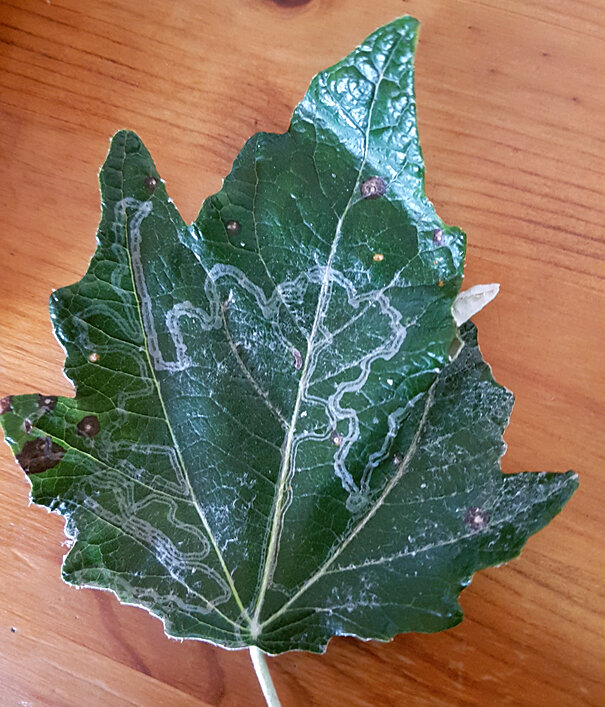
In the final week of July after breaking up for work for the holidays I went on a few insect hunting walks and one of the best was around Les Vardes Quarry nature trail on 20th when there was lots of activity. Some silvery mines on a White Poplar turned out to be Phyllocnistis xenia, a new species for the island - it may have been here a short while but never noticed, although it is quite a recent arrival in the UK too. There were lots of species of bees, wasps and flies on offer and I photographed a random small fly that turned out to be a White-barred Soldierfly (Oxycera morrisii) a new species for the island. A good plant discovery was a couple of sprigs of Yarrow Broomrape at Port Grat, a new location for the locally rare species.

Phyllocnistis xenia - larval mines in leaf of White Poplar - Les Vardes, 20 Jul 20

Phyllocnistis xenia - larval mines in leaf of White Poplar - Les Vardes, 20 Jul 20

Colletes Fodiens - Les Vardes, 20 Jul 20 - a new species for me that was common on the ragwort, where also a Pantaloon Bee was seen, also new for me.

Colletes Fodiens - Les Vardes, 20 Jul 20 - a new species for me that was common on the ragwort, where also a Pantaloon Bee was seen, also new for me.

Epeolus variegatus - Les Vardes, 20 Jul 20 - only my second sighting of this species

Epeolus variegatus - Les Vardes, 20 Jul 20 - only my second sighting of this species

Common Darter - Les Vardes, 20 Jul 20

Common Darter - Les Vardes, 20 Jul 20

Oxycera morrisii (White-barred Soldierfly) - Les Vardes, 20 Jul 20 - a new species for Guernsey

Oxycera morrisii (White-barred Soldierfly) - Les Vardes, 20 Jul 20 - a new species for Guernsey

Noon Fly (Mesembrina meridiana) - Reservoir, 24 Jul 20

Noon Fly (Mesembrina meridiana) - Reservoir, 24 Jul 20

Ectophasia crassipennis (female) - St. Sampsons HS area, 28 Jul 20

Ectophasia crassipennis (female) - St. Sampsons HS area, 28 Jul 20

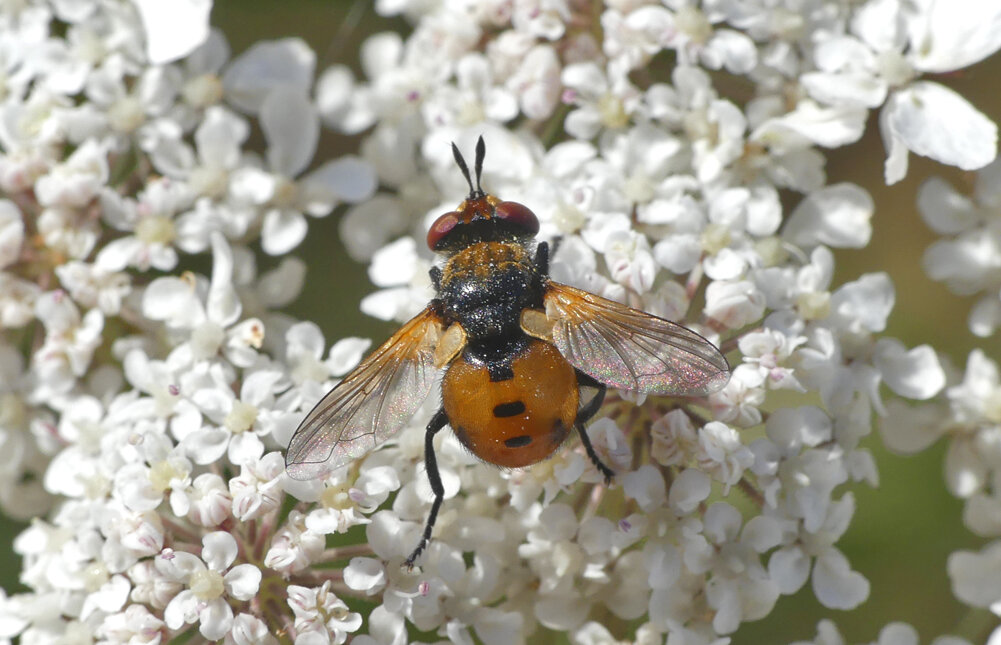
Gymnosoma rotundatum - Les Vardes, 20 Jul 20

Gymnosoma rotundatum - Les Vardes, 20 Jul 20

Yarrow Broomrape - Port Grat, 13 Jul 20

Yarrow Broomrape - Port Grat, 13 Jul 20

Prickly Saltwort flower - Jaonneuse, 31 Jul 20

Prickly Saltwort flower - Jaonneuse, 31 Jul 20

Of course something else important happened during the month but I can’t quite remember what it was….

leedspromotionpic.jpg