October 2020 part i

Once October gets around I feel as though I can’t waste a single opportunity to get out in the field. On 3rd, despite the awfully wet weather, I dragged myself out Saturday afternoon since it was my only free slot during the whole weekend. Driving past L’Eree I scanned the scrape to see a Pintail and 2 Black-tailed Godwits there, both of which were new in - no doubt due to the arrival of the rain. Rushing onwards to Pleinmont I was pleased that there was a little break in the rain and I headed first for the weedy corridor. Apart from 4 Skylarks which came up off the grass, one of the first birds I saw was a perky little Yellow-browed Warbler along the hedge-line. I think this is the first one of these I have seen actually “on top” of Pleinmont headland rather than in the valleys and I managed to get a nice picture despite the very dull grey afternoon skies.

Yellow-browed Warbler - Pleinmont, 3 Oct 20

Yellow-browed Warbler - Pleinmont, 3 Oct 20

It was a pretty good day Blackcaps with more than 20 seen and with these, along the steep path down to Pezeries, a Garden Warbler showed very nicely out in the open on the ivy. As I poked my head above the slope by the green bench at Pezeries, a second Yellow-browed Warbler flew up and into the Sycamores. Unfortunately, just as I reached the furthest point from the car down on the bottom road, the skies opened and the rain alternated between deluge and torrent and the water started to seep. I trudged back up the slope, only noting a couple of Chiffchaffs and a Firecrest on the way, and sacked it off as a bad job. I cannot remember the last time I was so wet, the water percolating into every single one of my clothing items. Good job it is just a short drive home.

The next week was a total wipe-out for birding but I found myself back out at Pleinmont on 10th for another attempt to find the boy. There wasn’t especially much to see although there was a notable increase in Firecrests and Chiffchaffs, with more than ten of each present. The weather was at least dry this time but apart from a few Siskins and the returning wintering Whimbrel, it was disappointingly quiet for uncommon species. Although, by the side of the road at Valniquets I did see a new species for me - Red Cage Fungus. Rather an odd species indeed, I’ve never seen anything like it before. A quick call in at Prevote on the way back didn’t add anything but there was a nice feeding flock of 20 Swallows and House Martins feeding in the sheltered valley.

Pleinmont woods, 10 Oct 20

Pleinmont woods, 10 Oct 20

Red Cage Fungus - Pleinmont, 10 Oct 20

Red Cage Fungus - Pleinmont, 10 Oct 20

Red Cage Fungus - Pleinmont, 10 Oct 20

Red Cage Fungus - Pleinmont, 10 Oct 20

The next working week was much more ‘birdable’ and I was able to spot a few birds on the way or the way home from work. On 13th there was a nice trio of Grey Wagtail, Golden Plover and Wheatear at Pulias. The next day there seemed to have been some movement overnight and, as I got into my car on the driveway early morning both my first Redwing of the autumn and a Siskin went overhead. Stopping briefly at Fort Hommet car park there was both a Wheatear and a new-in Brent Goose on the beach, then a Lapwing came in off the sea and headed inland. On the way back two more Brent Geese followed me up the coast all the way from Cobo to Rousse, where a flock of 6 Ravens was probably my biggest count. Not a bad selection for the day since I hadn’t strayed more than 3 yards from the car.

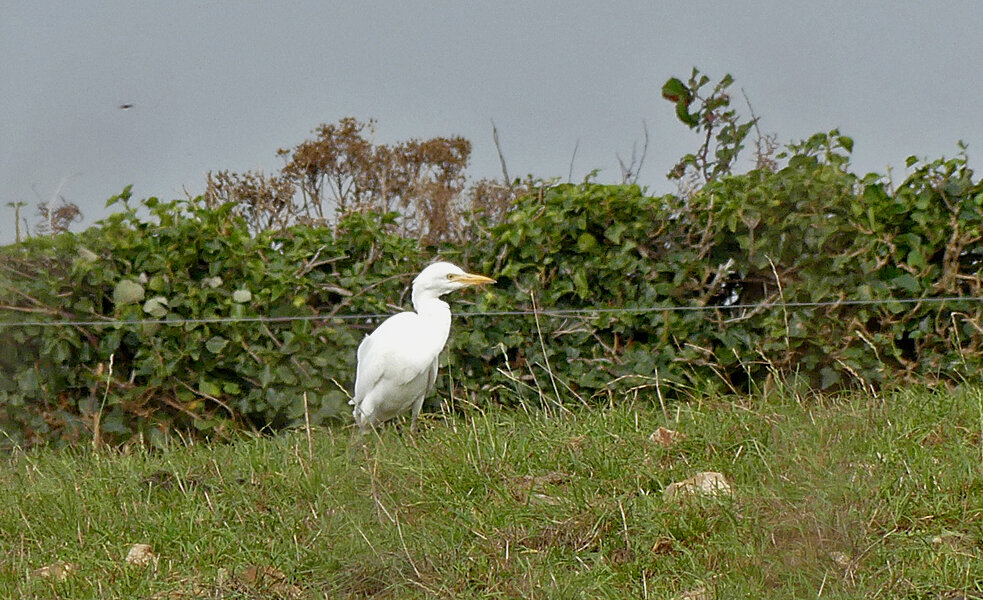
On 15th more birds had arrived and there was a flock of c.30 Redwings flying round the school car park when I arrived. After work, driving home there were still plenty of Swallows around the Vazon and Cobo area, quite a lot for this late in the month. Whilst on the way back, the grapevine fired up to say that a Great White Egret had just appeared at Vale Pond. It would be rude not to call and see it I thought, but when I got into the hide I found that the GWE was actually a Cattle Egret - well they both have yellow beaks I suppose. A Cetti’s Warbler was singing at the pond which I haven’t heard there for a while. The next day was Friday and a Skylark was the oddest sighting, flying up from the gorse below the pines at Fort Hommet.

presumed Lesser Black-backed Gulls - migrating SW really, really high over the garden, 11 Oct 20

presumed Lesser Black-backed Gulls - migrating SW really, really high over the garden, 11 Oct 20

Cattle Egret - Vale Pond, 15 Oct 20

Cattle Egret - Vale Pond, 15 Oct 20

Saturday 17th October and I was again up at Pleinmont rarity hunting with Mark and Wayne. We had a great few hour’s birding but a cherry on the top would have been nice. Just walking round the lanes we could see that there had been plenty of thrushes new in and small numbers of other species swirling around. Not a massive arrival but very encouraging. Walking along the weedy corridor there were a few Chiffchaffs feeding along the hedge and one was pretty brown looking and feeding on the floor. I was hoping that it could have been a Dusky Warbler from its colouration and behaviour but it flew ahead a little way and into the bushes. We waited and it appeared again but it immediately seemed to pale for Dusky. It showed a few more times and it was almost certainly a Siberian Chiffchaff with its brown and whitish colouration and very distinct creamy eyebrow. Unfortunately we didn’t get either a call or a photo as it soon crossed over into a private garden where it disappeared.

As we were concentrating on relocating this bird we didn’t see that a Great White Egret had just flown over us and we only managed a rear end view as it headed away from us and north from the headland. This bird had been in the island for a week or so and perhaps longer but was typically elusive, popping up in different spots every few days. Only the second time I have seen the species in Guernsey.

Great White Egret - Pleinmont, 17 Oct 20

Great White Egret - Pleinmont, 17 Oct 20

Heading into the camping field/NT path area we could see that thrushes and other birds seemed to be still arriving. We had some Fieldfares drop into the tops of the camping pines, my first of the winter, and so many Song Thrushes exploding out of the Blackthorn bushes near the end car park. As we rounded a corner and more thrushes went up, a bullet of a Merlin raced by, then u-turned, giving us a great view, albeit brief. Walking back up the slope a bit we heard an unfamiliar call and two Ring Ouzels appeared from nowhere and flew past us. This was not the call I expect from an Ouzel, which I associate with a hard “chukk” note, and I managed to passively record it on my digital recorder.

Almost immediately after these two birds, three more Ring Ouzels seemed to come in from the west and they perched on some bushes briefly, and then a flock of 20-odd Swallows appeared from nowhere. Surely something good would be arriving today? But alas we didn’t pick out anything exciting. There were a few Siskins and Skylarks about and a Snipe flew East. More hirundines arrived and we must have seen at least 50 Swallows and 5 House Martins during the morning. A Mistle Thrush flying across the Societe fields meant it was a six-thrush morning for us. It was the kind of day which we knew must have held a rare bird on the headland somewhere but there was not enough bodies around to find it.

Mushroom - Rousse, 7 Oct 20

Mushroom - Rousse, 7 Oct 20
September 2020 part ii

Dotterel - Mont Herault, 20 Sep 20

Dotterel - Mont Herault, 20 Sep 20

During the last two weeks of September I saw a pleasing variety of species and there were some terrific days of birding. There wasn’t anything super-rare but there was a new species for Guernsey for me.

On 15th I popped back to Pleinmont after work in case the Pallid Harrier was still around but it had gone already. That day however I did see two decent local birds with a Common Gull on Vazon beach and an early Siskin go over the garden at home. On 17th I had a good patch record when two Teal flew past Pulias along the shoreline - I’ve only a handful of records for the patch. The next day before work the tide was very high and there were large flocks of gulls feeding on the critters collecting along the shoreline. At Vazon there were 11 Med Gulls and a Common Gull, probably more.

Tower field, Pleinmont, 20 Sep 20

Tower field, Pleinmont, 20 Sep 20

The next weekend arrived and on 20th I was up at Pleinmont at first light in decent, sunny conditions, albeit a little breezy on top. There wasn’t a lot of birds around the top of the headland but the first (probably) migrant Firecrests were showing well in the camping field, but apart from single Whinchat and Wheatear, it was quiet for grounded birds.

Firecrest - Pleinmont, 20 Sep 20

Firecrest - Pleinmont, 20 Sep 20

So I pushed on towards Mont Herault where there seemed to be more activity in the fields and just east of the scramble track I came across a terrific flock of Yellow Wagtails which were flying round and round me, diving in and out of the grass. There were probably in excess of 30 birds. In the large field a group of 5 Golden Plovers were warily striding around, concerned about the activity next door where they were just about to start clay-pigeon shooting (as soon as the first shots fired out 20 mins later, they were gone).

Golden Plovers - Mont Herault, 20 Sep 20

Golden Plovers - Mont Herault, 20 Sep 20

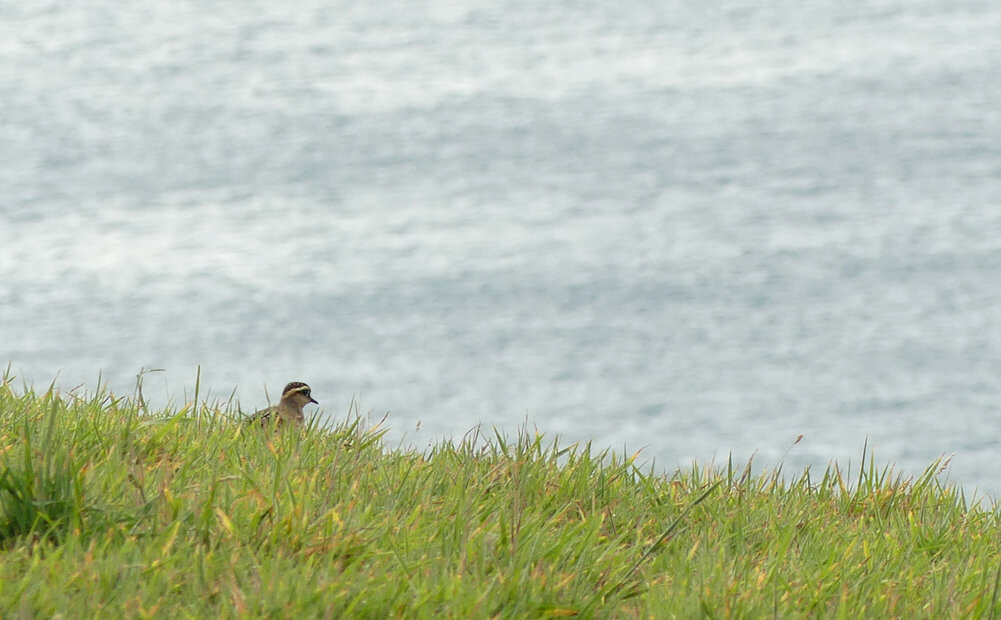
I knew that there was a Dotterel somewhere in this vicinity and I wasn’t sure exactly where, but I spotted a distant photographer crouching in a grassy field by the cliff edge so I presumed that was where it was. By the time I had walked there I couldn’t see the bird until a tiny head poked out over the slope towards the cliff. I thought that the best tactic would be to sit myself on the ground in the middle of the field and wait for the bird to head back inland. This it did, and pretty soon I had really close views as it tip-toed through the grass. Unlike the Goldies, this bird didn’t seem interested in the gunshots from the next field and just looked puzzled by them.

Dotterel - Mont Herault, 20 Sep 20

Dotterel - Mont Herault, 20 Sep 20

Dotterel - Mont Herault, 20 Sep 20

Dotterel - Mont Herault, 20 Sep 20

I pushed on along the clifftop further east and could see lots of birds in a cow field just over the next rise. When I got there I could see that this was another flock of Yellow Wagtails. It was difficult to tell how many were in and around the field as it was not all viewable, but it was a minimum of 30, but maybe even double that number. There were also plenty of Meadow Pipits and I could hear a faint lark calling somewhere. I eventually found it distantly in the grass and, despite not having my scope on me, I worked out that it was just a Skylark, my first of the autumn.

Yellow Wagtails - Mont Herault, 20 Sep 20

Yellow Wagtails - Mont Herault, 20 Sep 20

All of a sudden a Cattle Egret appeared in front of me and stalked around the cows’ legs. It took off every now and then but kept reappearing. Even though they are quite regular now, Cattle Egrets still have a legacy ‘mega’ tag to them and it is always a thrill to spot one. There had been a few sightings in the north and centre of the island at the start of the month but I’d like to think that this had arrived new in from the south and plonked itself in the first cow field it saw.

Cattle Egret - Mont Herault, 20 Sep 20

Cattle Egret - Mont Herault, 20 Sep 20

Cattle Egret - Mont Herault, 20 Sep 20

Cattle Egret - Mont Herault, 20 Sep 20

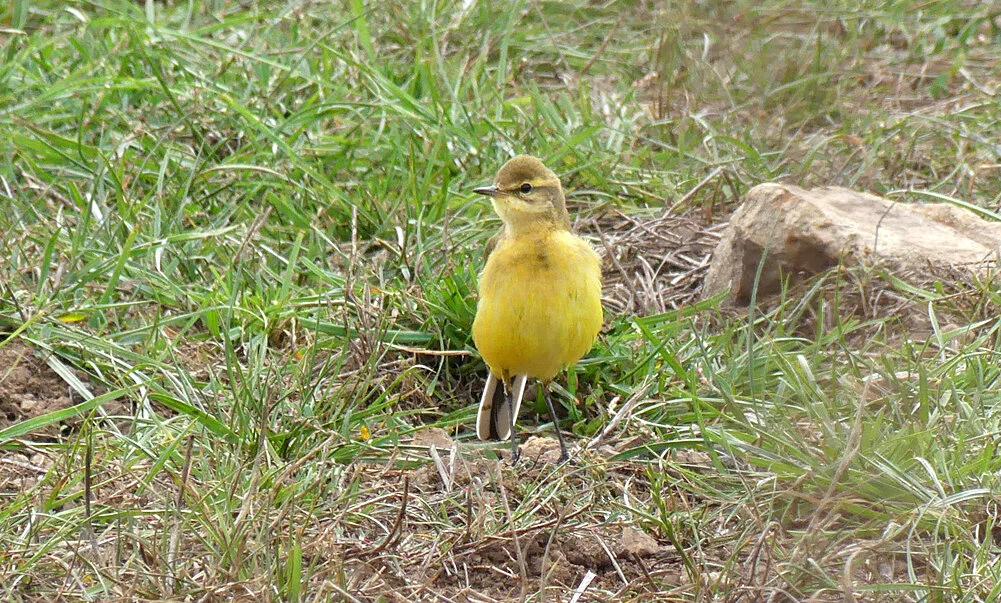
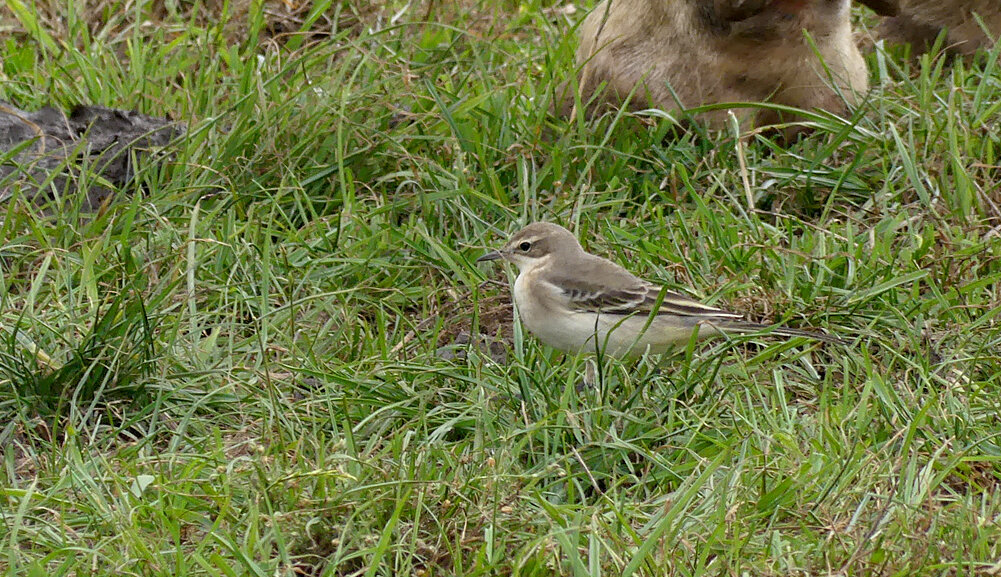
I’d noticed that one of the distant Yellow Wagtails was looking really grey-coloured and I thought it was possibly a Citrine. So with a little bit of clambering and scrabbling I managed to fight my way through to the other edge of the field for a better look. Here, many of the Yellow Wags were showing really close to the fence for some nice pics. The grey bird was also showing well and I was a little disappointed to see that it didn’t have the head pattern for a Citrine and was just an unusually grey Yellow. I suppose there is a possibility of an Eastern Yellow Wag but it is a little early in the autumn to be considering one of those.

Yellow Wagtail - Mont Herault, 20 Sep 20

Yellow Wagtail - Mont Herault, 20 Sep 20

Yellow Wagtail - Mont Herault, 20 Sep 20

Yellow Wagtail - Mont Herault, 20 Sep 20

Yellow Wagtail - Mont Herault, 20 Sep 20

Yellow Wagtail - Mont Herault, 20 Sep 20

Yellow Wagtail - Mont Herault, 20 Sep 20 - I think that the contrast in the coverts means this is probably a first-winter bird and the brightness of the yellow means it is a male (although I am happy to be corrected)

Yellow Wagtail - Mont Herault, 20 Sep 20 - I think that the contrast in the coverts means this is probably a first-winter bird and the brightness of the yellow means it is a male (although I am happy to be corrected)

Whilst taking photos of the wagtails I heard an unfamiliar wader call and looked up to see that the Dotterel had finally got spooked and was heading east along the cliffs. However it turned round and went back the way it came, and I recorded the call on my new device. I headed back through the Mont Herault fields and stopped to look at the original flock of Yellow Wagtails again when a Hobby darted past in front of me, heading east. Then once again the Dotterel appeared and did another fly-past, and I got another, better recording.

Dotterel - Mont Herault, 20 Sep 20

Dotterel - Mont Herault, 20 Sep 20

Grey Heron flight call - Pleinmont, 20 Sep 20

Grey Heron flight call - Pleinmont, 20 Sep 20

Driving home, I stopped to look at L’Eree beach and had a nice selection of waders and gulls, including 10 Bar-tailed Godwits, 5 Golden Plovers (maybe the Pleinmont birds), 4 Med Gulls and a Common Gull. So, nothing very rare found but a super September day in the west.

During the next work week, I didn’t have any real chance to do any quality birding but I did have a migrant Snipe over Ft Hommet on 22nd. There seemed to have been a bit of arrival of Robins and they were much more visible on the headlands, for example this bird feeding in the top car park at Pulias which looked tired enough to have just arrived. These birds often seem to be greyer and paler orange than local birds. But it may just be my imagination - wishfully imagining that they have flown from exotic locations to get here, when it could be the case that they were actually born three bushes away!

Robin - Pulias, 23 Sep 20

Robin - Pulias, 23 Sep 20

The next weekend the winds switched to the north and so Saturday morning, 26th September, I was up on the rocks at Jaonneuse for some seawatching with the guys. And it was a very good morning, with 52 Sooty Shearwaters being a massive count, the most I have seen in a day for over a decade, and some passing pretty close inside the reef. Saw a single Common Scoter and the first few Kittiwakes of the autumn. There were not very many skuas, with 9 Bonxies and 2 Arctics, but we did see a single Pomarine. I had my camera out at the time and managed a (not very close) video. I also managed to get my scope on it and it was relatively good views.

Pomarine Skua - video stills - Jaonneuse, 26 Sep 20

Pomarine Skua - video stills - Jaonneuse, 26 Sep 20

I had a spare hour or two in the afternoon and so I popped out and checked a couple of south coast spots that would be sheltered from the northerly winds. Prevote always looks perfect for hiding a rarity and when I saw a woodpecker dive into a small bush at the bottom of the valley, I immediately thought “sapsucker!” or “middle-spot!!”. Of course, it was a Great Spotted Woodpecker which flew back up the valley into the larger trees. This was an unusual location for this species which is rarely seen away from the centre and east of the island and this tiny coastal valley in the south-west is not ideal - perhaps it was a migrant after all. There were a few Firecrests and Chiffchaffs in the bushes and I was lucky to spot a roosting Barn Owl in a nearby copse which very politely gave me a few minutes to take some nice pictures.

Prevote valley - 26 Sep 20

Prevote valley - 26 Sep 20

Red Admiral - Prevote, 26 Sep 20

Red Admiral - Prevote, 26 Sep 20

Barn Owl - Prevote, 26 Sep 20

Barn Owl - Prevote, 26 Sep 20

The winds continued northerly the next day and I was able to give the seawatching a second shot from Jaonneuse. It wasn’t quite a good for shearwaters, although there were more Manx than yesterday. It was much better for skuas however and a total of 49 Bonxies was one of my best days ever for those big boys. Just 3 Arctics wasn’t very many but we saw two excellent Pom Skuas inside the reef. The first was at 0952, a cracker of an adult - with spoons! - and the second one at 1014 was a darker juvenile which showed some helpful ID pointers, like the different rump tone compared to the mantle. This made four Poms in the autumn so far which I think is a record for me.

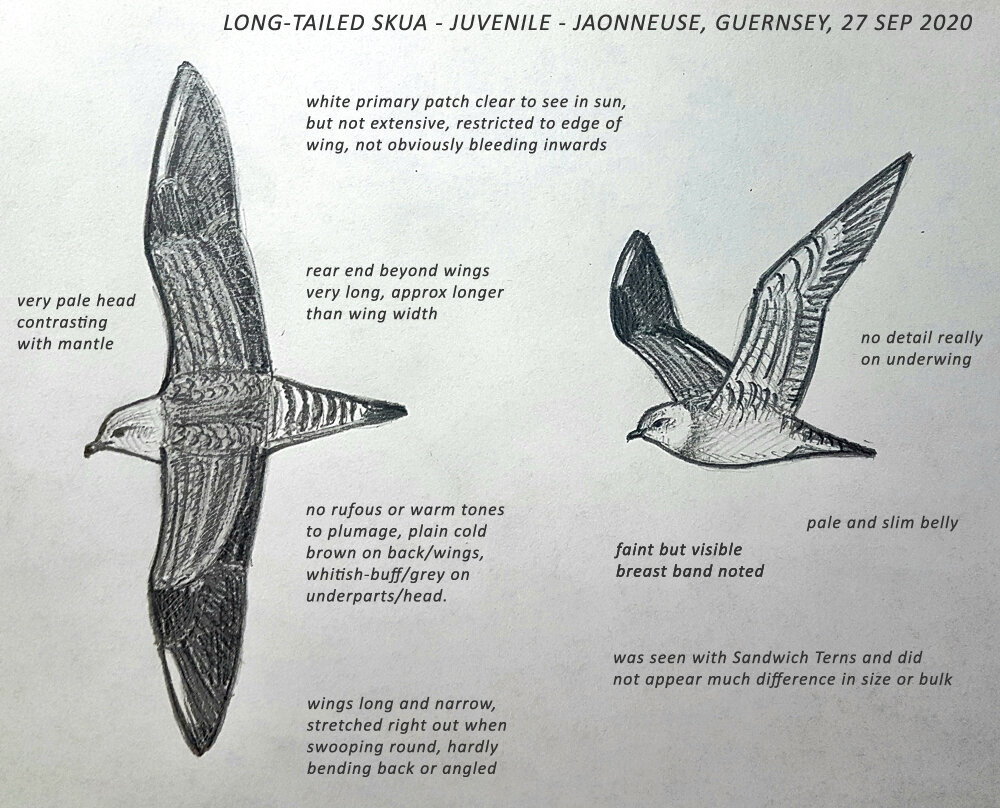
I was more than satisfied with these, but then at 1030 another skua appeared, taking interest in a couple of Sandwich Terns. This immediately flagged up as a possible Long-tailed Skua since it was not dissimilar in size and had an almost glowing pale head, which looked white in the bright sun. We watched it pass not too far out and even though it was difficult to get fine detail we were very satisfied on the identification (see diagram below for features noted). This was very exciting - a four-skua day! (in fact a four-skua hour). Only my second sighting for Guernsey, the first being in September 2013, which I notice passed at a similar time, 1030. It is still only the 15th record for Guernsey, despite regular seawatching over the last 20 years. You can’t leave early if you want to see decent skuas it seems.

Long-tailed Skua JAO 27Sep20 notes copy.jpg

And then just as September was finishing I got a nice easy Guernsey lifer - a Red-necked Phalarope. Monday 28th there was a grapevine message about lunchtime for this bird at Vale Pond. But I was at work of course and I estimated a 50/50 chance that it would still be there on my way home. But it hadn’t flown off, or been eaten by a heron, and I saw it from the hide late in the afternoon. As can be seen from the photo, it wasn’t very close in, but was phalaroping around in the middle of the lake. For some reason this species has been incredibly rare in Guernsey, this being only the 3rd sighting on the island, so a good one to get.

Red-Necked Phalarope - Vale Pond, 28 Sep 20

Red-Necked Phalarope - Vale Pond, 28 Sep 20

The final sighting, well hearing, were some Crossbills at Le Guet on 29th. I didn’t see them so I wasn’t sure how many, but there were at least 2 or 3 birds calling. I may have doubted myself, assuming I had misheard, but I had the sound recorder on and was able to double check when I got home.

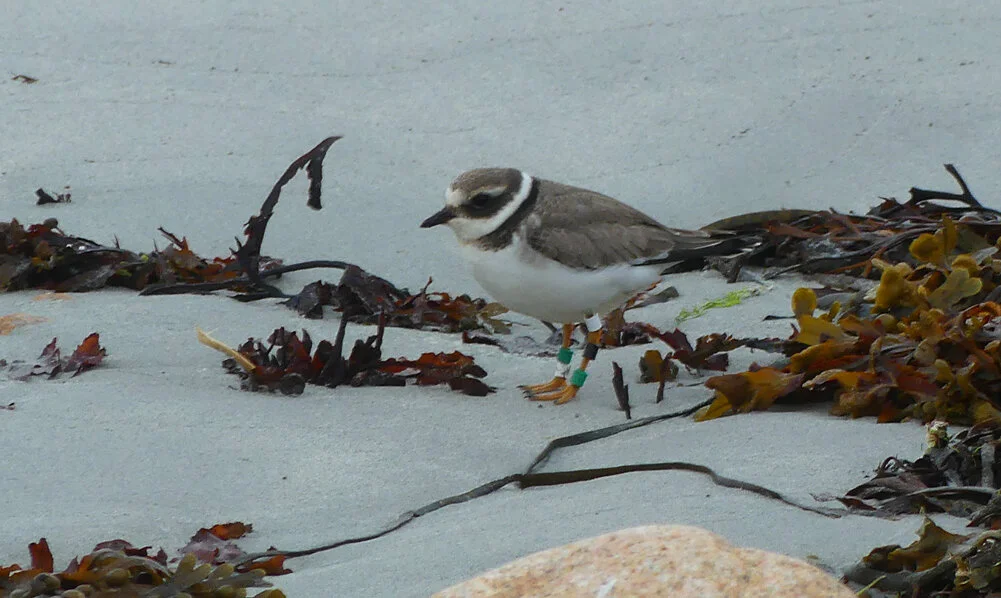
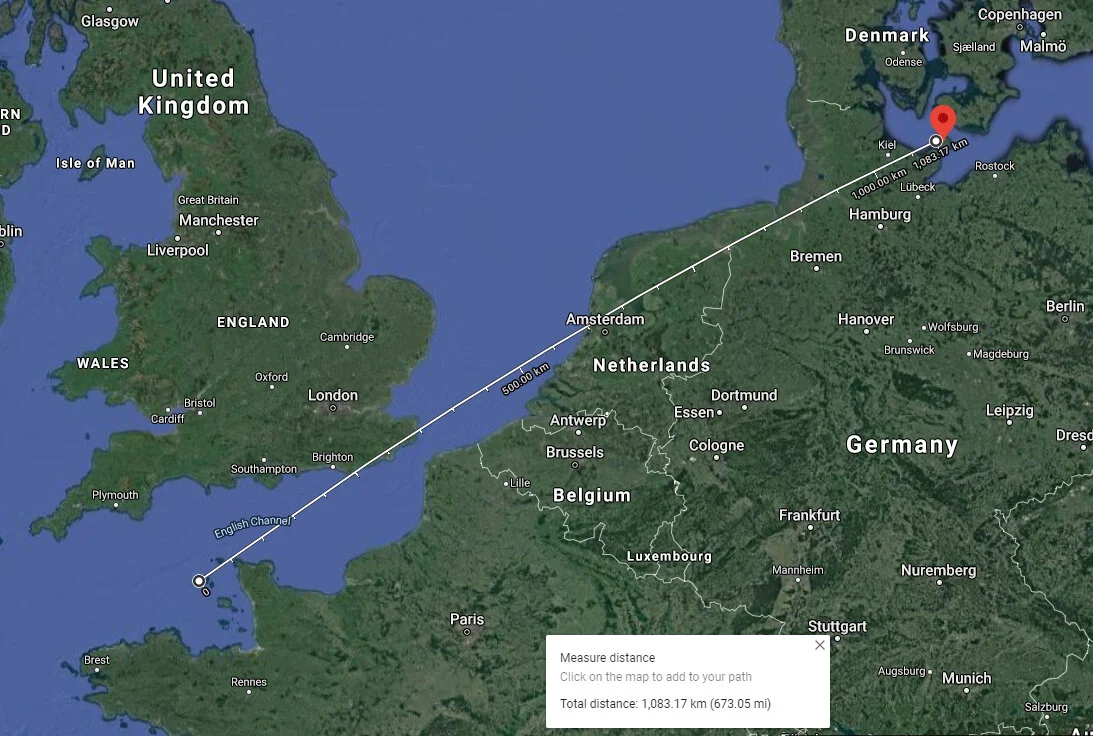
The only other interesting bird was a colour-ringed Ringed Plover that I had at Vazon on 17th September. The info came back quickly and it had been ringed at the nest in the spring, on an island in the German Baltic. It is not the first migrant Ringed Plover from the same scheme that we have seen on Guernsey.

Colour-ringed Ringed Plover - Vazon, 17 Sep 20

Colour-ringed Ringed Plover - Vazon, 17 Sep 20

Ringed Plover Vazon 17Sep20 map.jpg

Moth trap-wise there was just one weekend night that was suitable for trapping but nothing hugely significant was caught. Three migrants were a Pearly Underwing, a Vestal and a European Corn-borer.

European Corn-borer - garden, 19 Sep 20

European Corn-borer - garden, 19 Sep 20